
A liver-lesion record with an intervening increase
Qin Tingqian · 70 years · Sichuan
Source image 01Open full resolution ↗

Read the English image text
MYYL
Liver cancer
PATIENT FOLLOW-UP RECORDS
Qin Tingqian · 70 · Sichuan
English translation · Original medical images retained
CASE RECORD · Liver cancer · 70
Qin Tingqian was diagnosed with a liver malignancy in February 2024. The family describes a poor prognosis, inability to proceed with an interventional procedure, and troublesome effects from anticancer medicine. At consultation, the account lists multiple liver findings, a largest lesion of 6.8 × 6.5 cm, fluid accumulation and other reported metastases. Symptoms included bleeding gums, back pain, liver-area fullness and abnormal blood tests.
Follow-up after approximately two months
The family reported some symptom improvement. The supplied account lists lower blood markers, CEA and CA19-9 within the stated reference ranges, a liver lesion of 3.4 × 3.2 cm and less bilateral pleural fluid. These observations include a history of other cancer treatment.
Follow-up after approximately five months
The account reports that bleeding gums had stopped, with some remaining chest and abdominal fullness. September tests were described as showing AFP, CEA and carbohydrate antigens within the reference ranges. The liver lesion had increased compared with the previous review; this fluctuation is retained in the record.
Follow-up after approximately one year and two months
The later report lists a liver lesion of 4.1 × 3.2 cm. The account describes improved blood-test results. The sequence includes both increases and decreases in lesion size and should be read as a complete history.
During a home visit, the patient and family said he was living normally, doing farm work, eating, drinking, sleeping and passing stool well. They expressed appreciation for the care. The original home-visit photographs remain below. This is an individual follow-up account, not a guarantee of an outcome for another patient.
More liver cancer records
 1 source image
Liver cancer
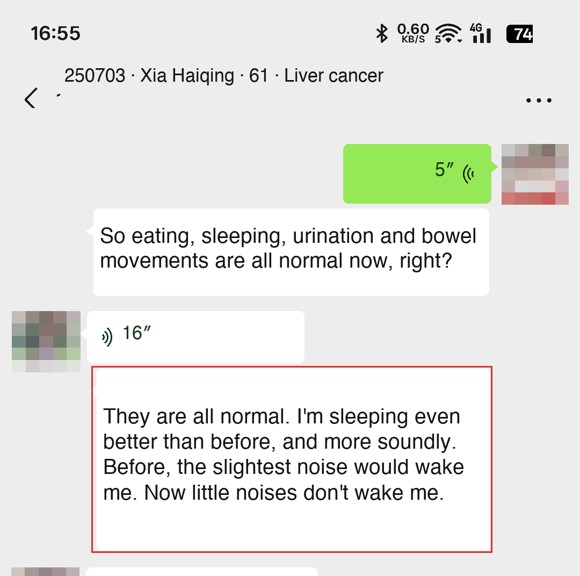
Eating more and sleeping more soundly
The correspondent described deeper sleep and less waking at small noises.
 1 source image
Liver cancer
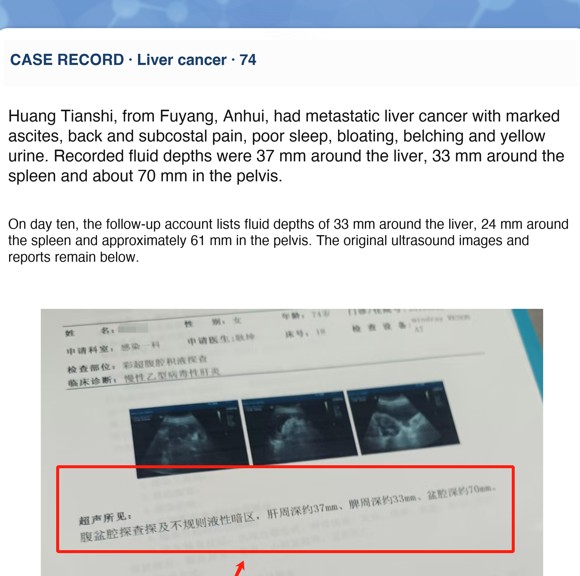
Ascites measurements at two visits
The case narrative describes liver cancer with abdominal fluid, back and subcostal pain, bloating and poor sleep.
 1 source image
Liver cancer
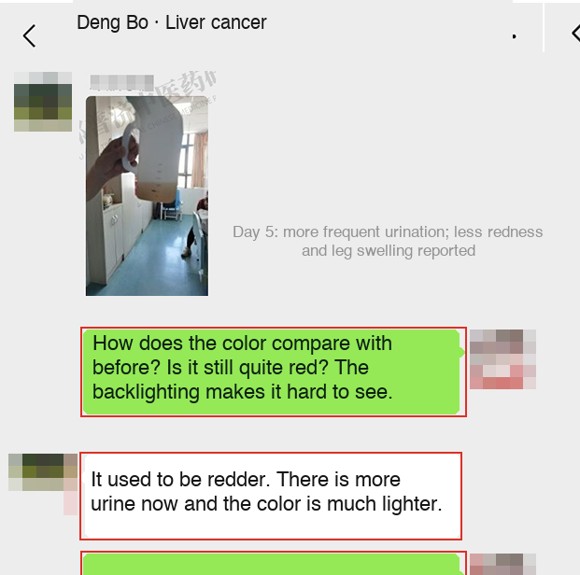
Less leg swelling, with symptoms still changing
The family described reduced thigh and calf swelling by day five, then easier walking and more regular bowel movements around day ten.