
Real conversations.
Care in context.
Read what patients and families shared during follow-up, alongside their original reports and images. Translated into English, with the source record kept in view.
Explore the records ↓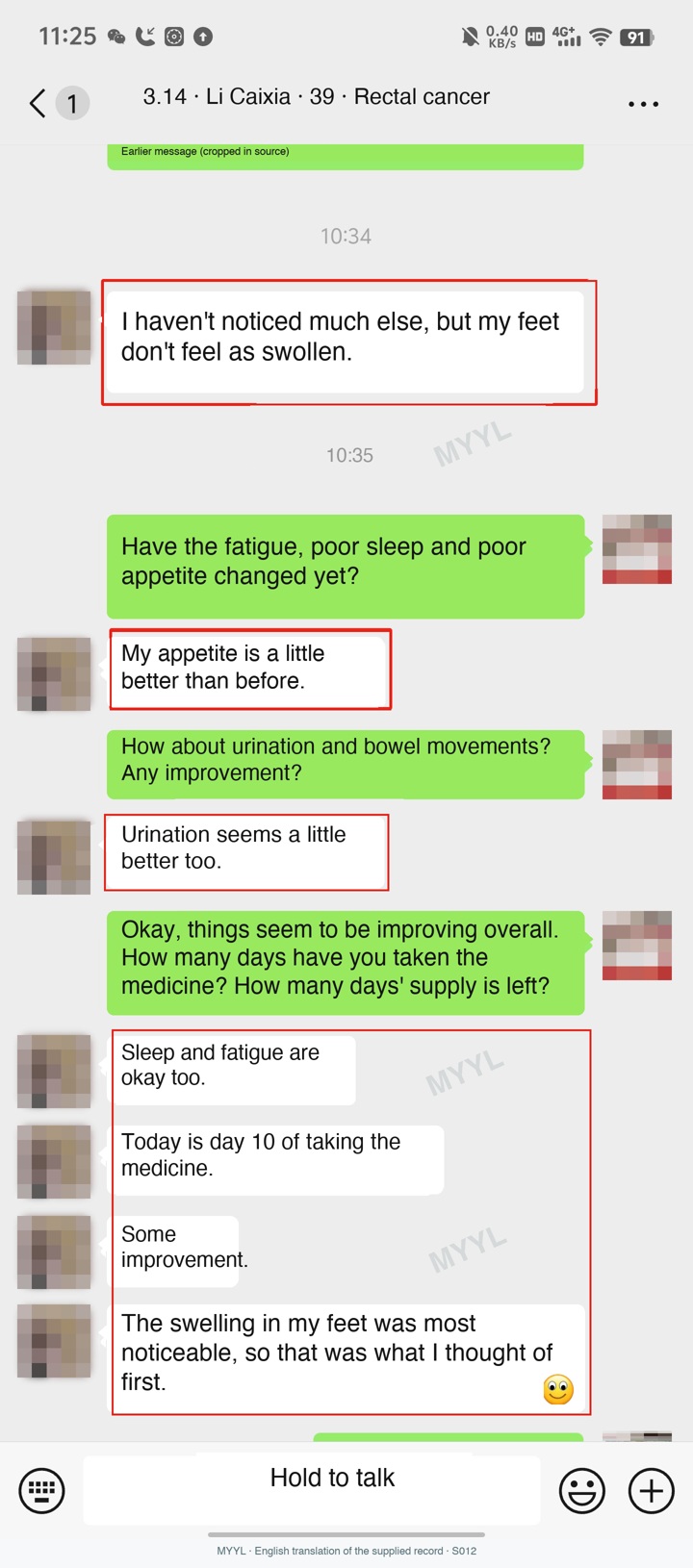
Message bubbles, dates and the flow of the chat stay visible.
Reports, scans and photographs remain part of each source.
A short account and readable transcript accompany the images.
Find a record relevant to you.
Each entry is a follow-up record. Some patients appear in more than one entry.
Browse all conditions
 1 source image
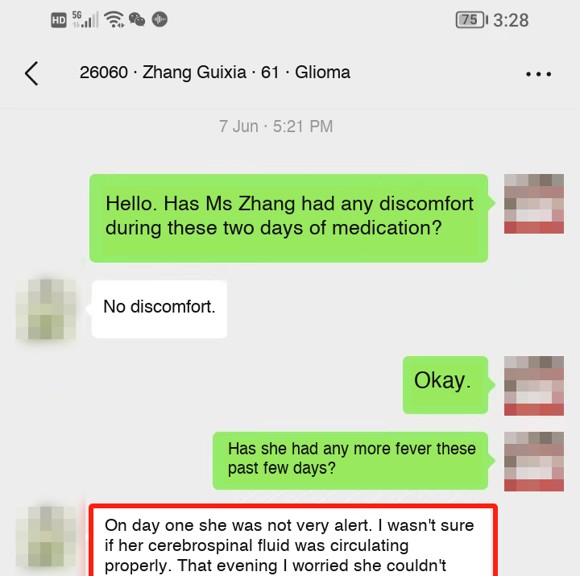
More time awake by the third day
The family described changes over the first three days of medication for a patient recorded as having a glioma.
 1 source image
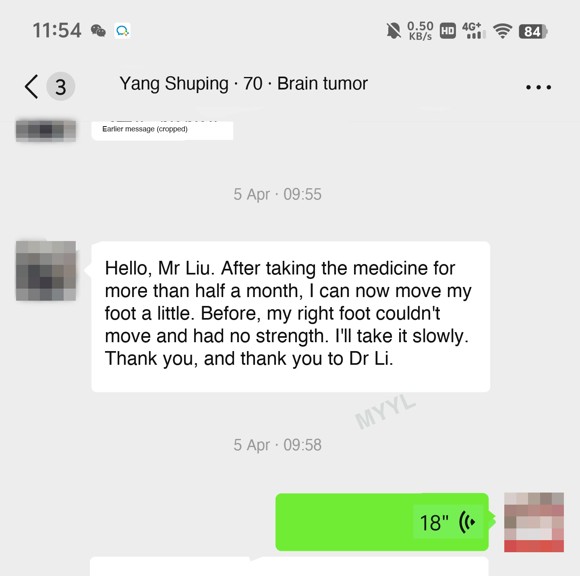
A little movement in the right foot
In a message dated April 5, the correspondent reported slight movement in the foot after just over two weeks of medication.
 1 source image
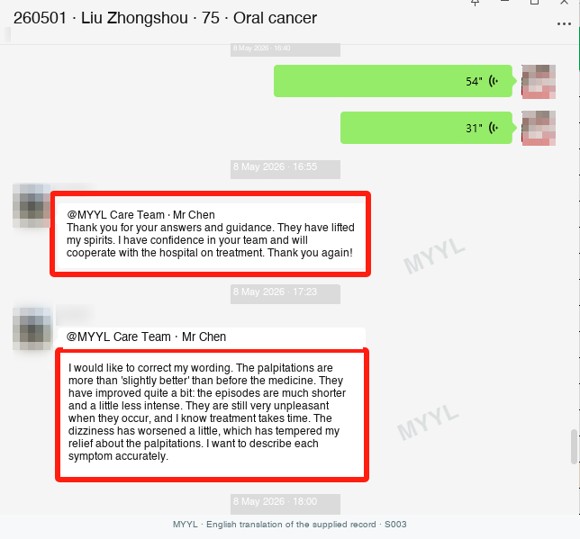
Palpitations eased; dizziness became worse
On May 8, 2026, Liu corrected his earlier description of palpitations.
 1 source image
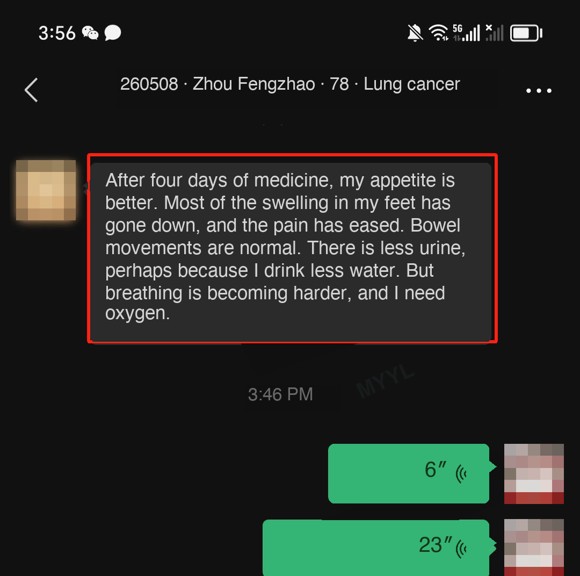
Appetite improved; breathing became harder
After four days of medication, the correspondent reported a better appetite, less swelling in the feet and some pain relief.
 1 source image
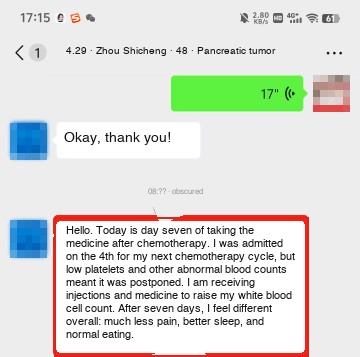
Less pain during a chemotherapy interval
Zhou reported seven days of medication after chemotherapy, with less pain, improved sleep and normal eating.
 1 source image
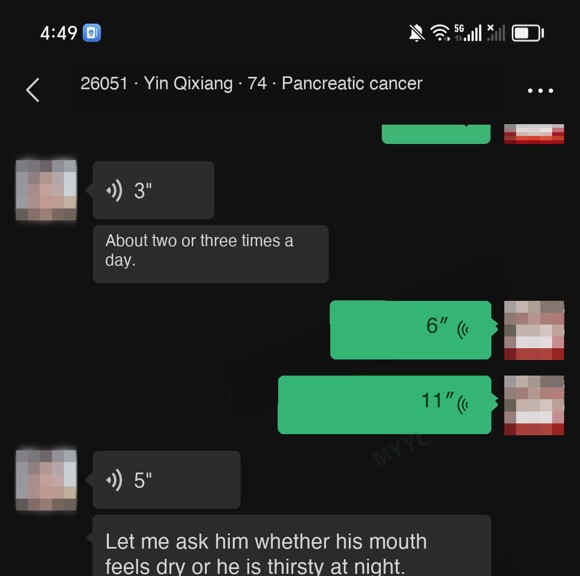
Less dry mouth and itching
In visible voice-message transcripts, a family member said that night-time dry mouth and thirst were less severe, itching had eased and Yin had a little more energy.
 2 source images
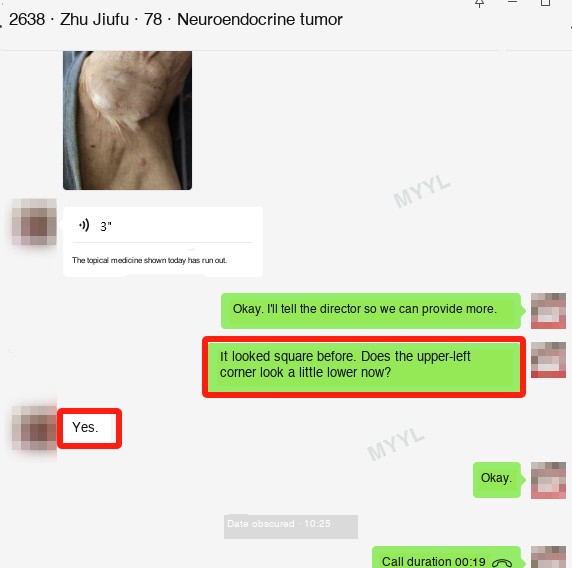
Urination improved; appetite remained limited
The archive describes a metastatic neuroendocrine tumor, with a lung primary and liver involvement under consideration.
 1 source image
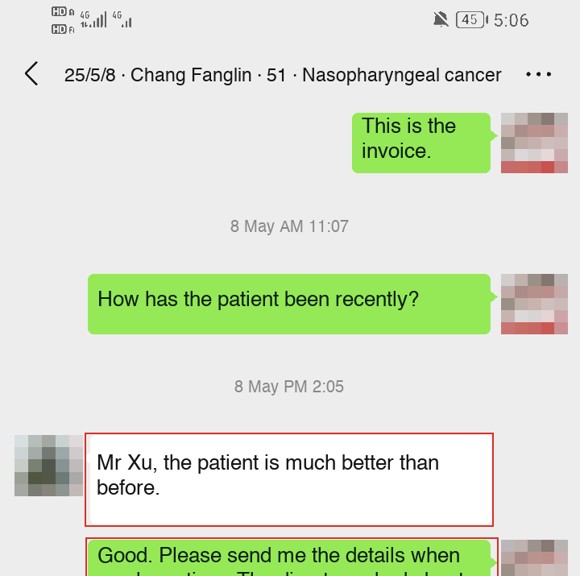
Swallowing and hearing felt better
A family member reported on May 8 that dizziness, headaches and general weakness had improved, although they still occurred occasionally.
 2 source images
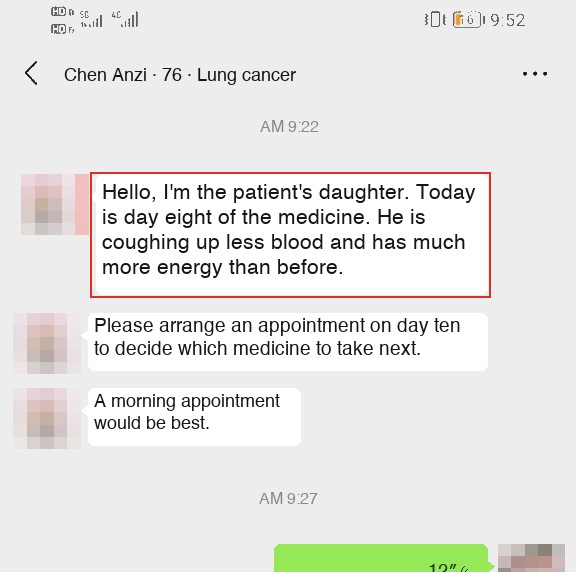
Two updates on coughing up blood
On day eight of medication, Chen's daughter said coughing up blood had become less frequent and his energy had improved.
 1 source image
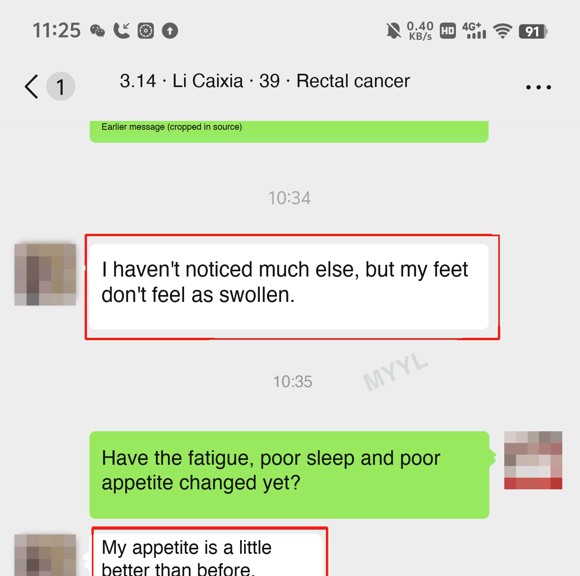
Less swelling. A better appetite.
Li said her feet felt less swollen and her appetite was a little better than before.
 1 source image
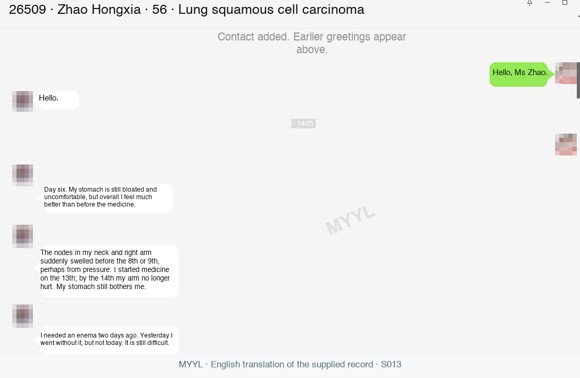
Less arm pain, with stomach discomfort continuing
On day six of medication, Zhao said abdominal bloating had eased but her stomach still felt uncomfortable.
 1 source image
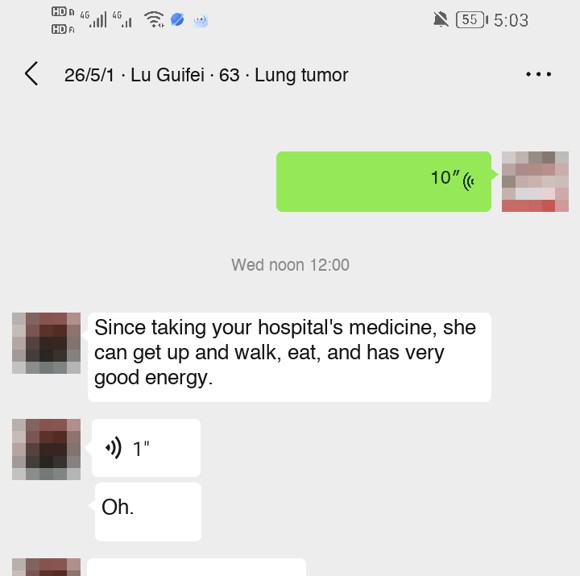
Getting up and going to the toilet independently
The family said Lu had been able to get up by the third day of medication, was eating one or two small bowls of rice and seemed in better spirits.
 1 source image
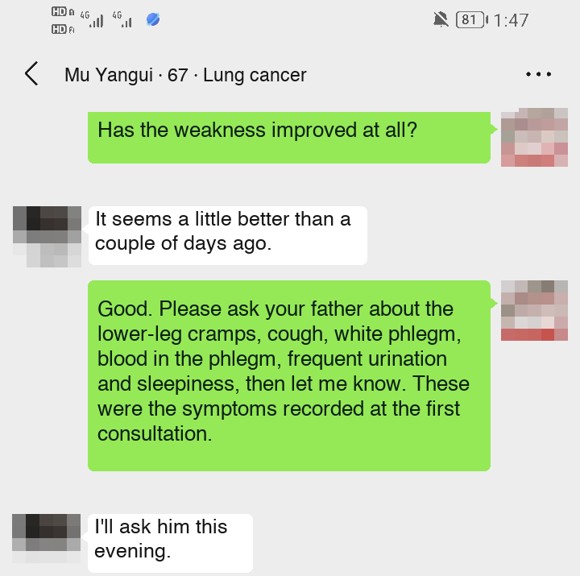
Less cramping and daytime sleepiness
In the May 19 update, the family said lower-leg muscle pain, previously like cramping, had stopped.
 1 source image
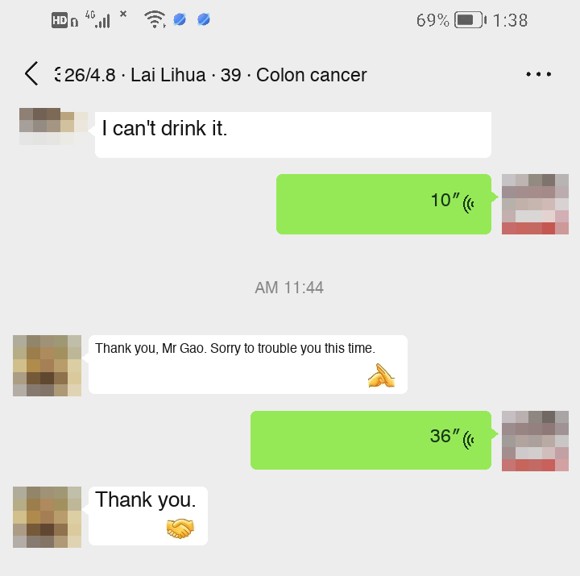
Less blood-streaked sputum and better sleep
Lai said that bright red streaks in the sputum, present a few days earlier, were almost absent that day.
 2 source images
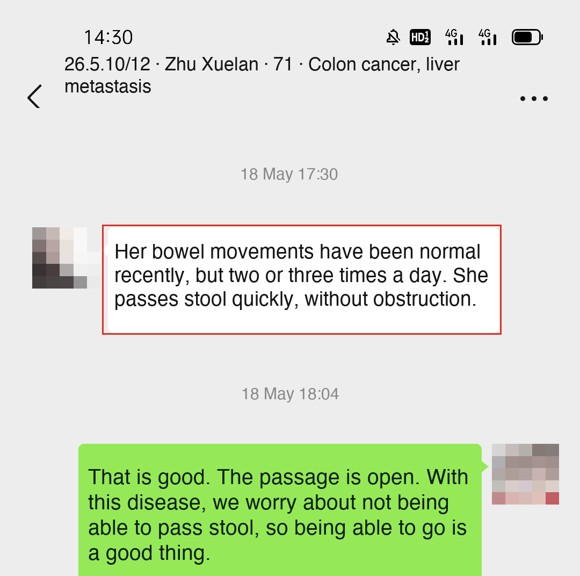
Better taste and easier bowel movements
In May 18 messages, the family described less bitterness in the mouth, improved taste, somewhat better appetite and increased strength despite continuing fatigue.
 1 source image
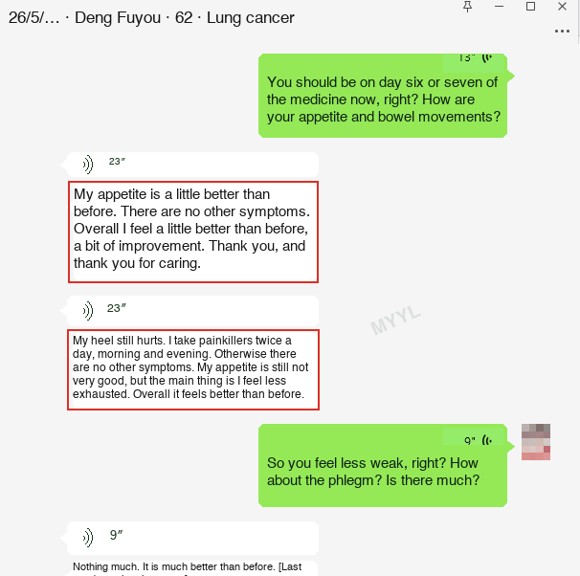
A little more energy, with pain medicine still needed
During a follow-up around day six or seven, Deng described a slight improvement in appetite and less fatigue.
 1 source image
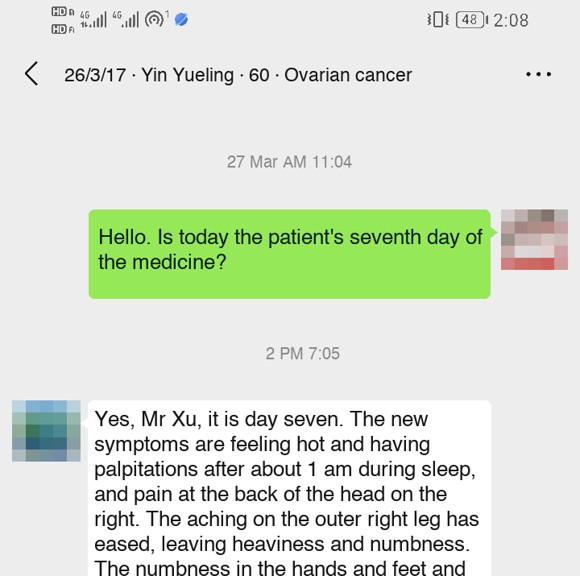
Leg pain eased, but new symptoms appeared
On day seven of medication, the family reported that pain along the outside of the right leg had lessened, leaving aching and numbness.
 1 source image
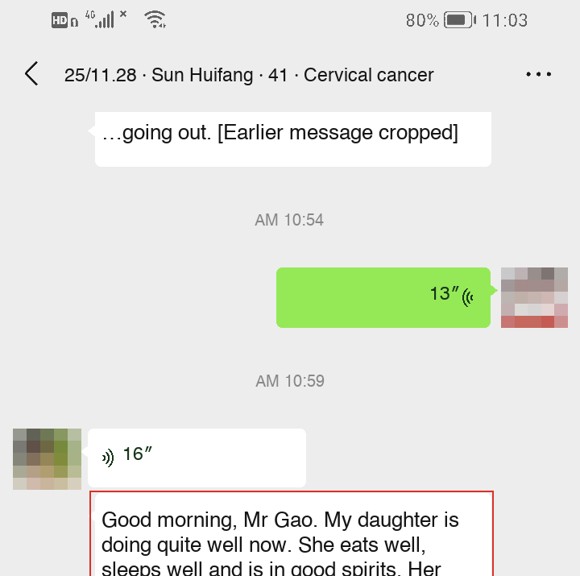
Eating, sleeping and feeling stronger
Sun's mother reported that her daughter was eating and sleeping well, was in a better mood and had more strength.
 1 source image
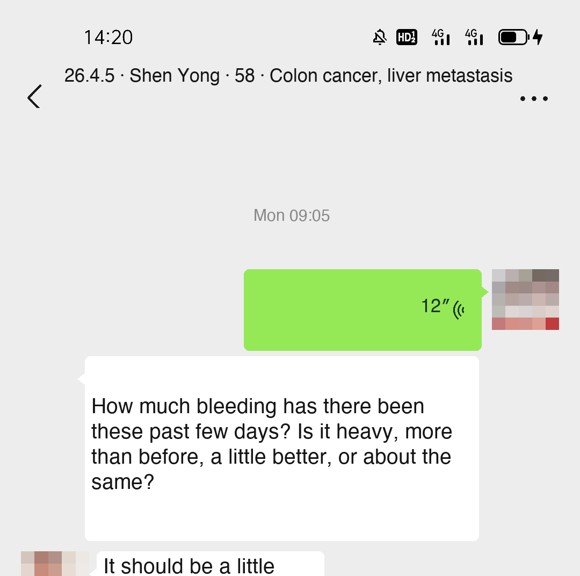
Less bleeding and abdominal bloating
In a Monday follow-up, Shen said bleeding seemed slightly reduced.
 1 source image
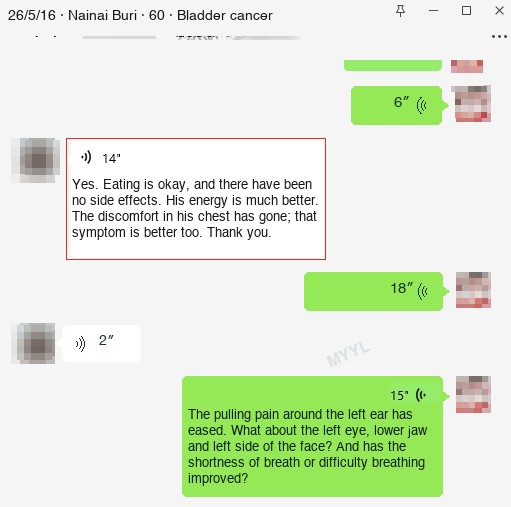
Less breathlessness on slopes
A family member described better energy and improvement in chest discomfort.
 1 source image
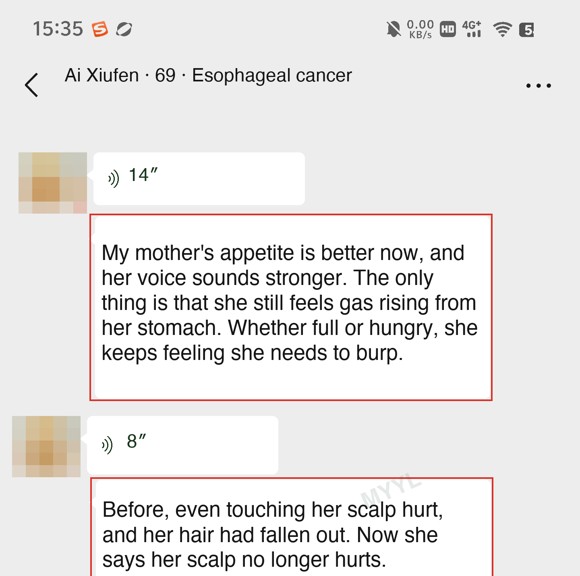
A stronger voice, with belching continuing
Ai's child said her appetite was better and her voice sounded stronger.
 1 source image
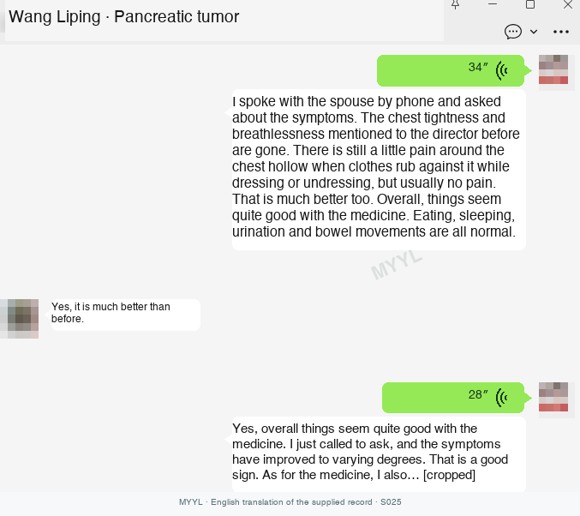
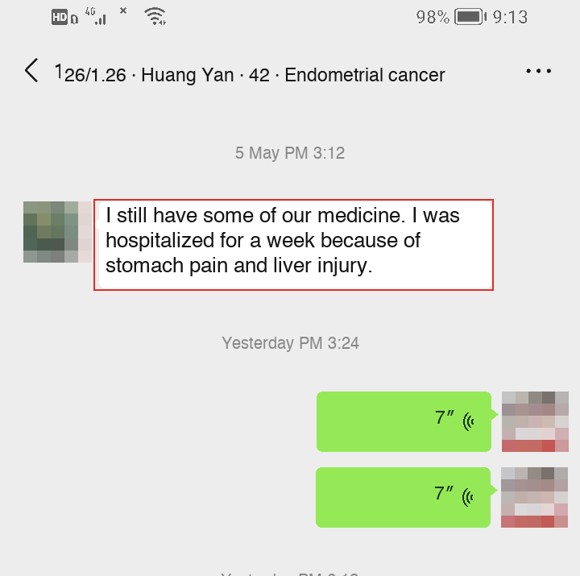
Source identity needs reconciliation
The folder names Wang Liping, age 73, with a pancreatic tumor.
 2 source images
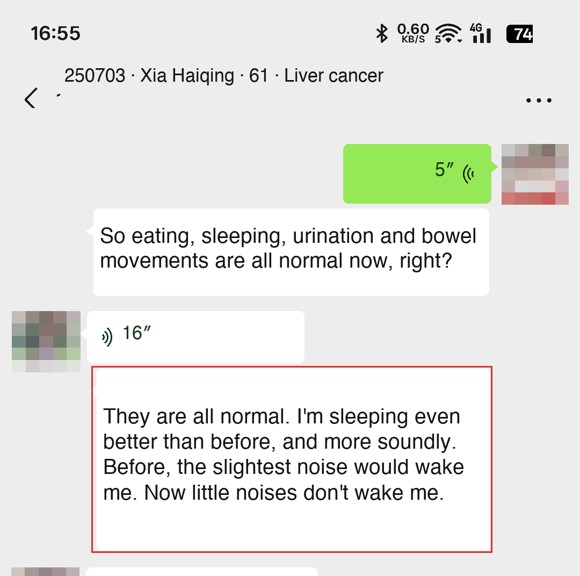
A follow-up describing hospital and emergency care
These messages describe significant ongoing illness rather than an improvement story.
 1 source image
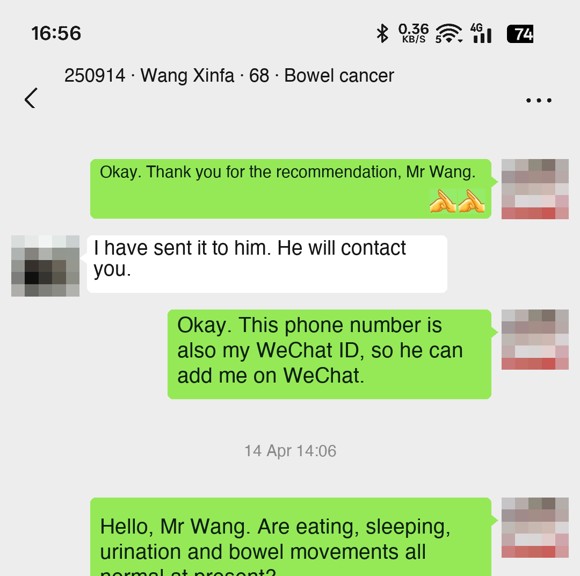
Eating more and sleeping more soundly
The correspondent described deeper sleep and less waking at small noises.
 1 source image
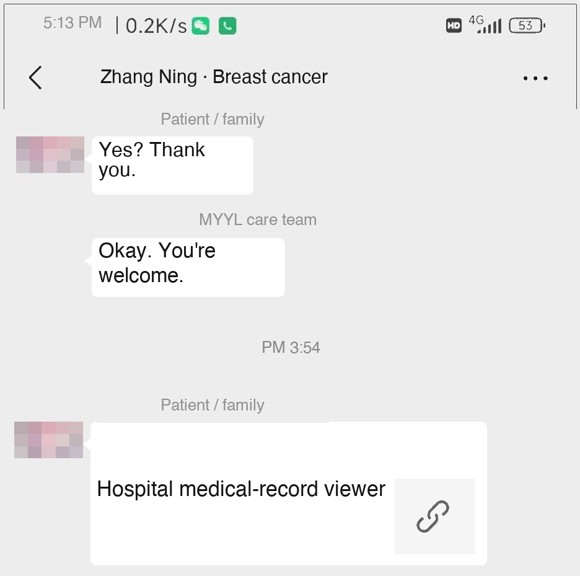
Stable eating and better sleep
In an April 15 message, Wang said his eating was unchanged, urination and bowel movements were normal, and sleep had improved.
 1 source image
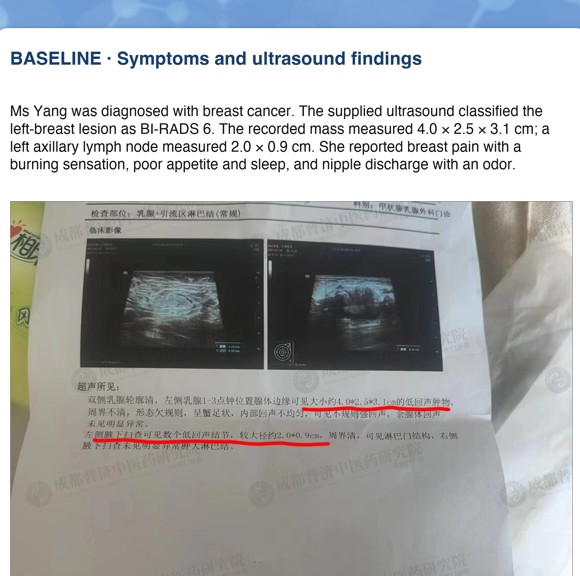
Serial breast ultrasound measurements
The supplied records describe left breast cancer with axillary lymph-node involvement, aching and fullness, nipple discharge, poor appetite and weight loss.
 1 source image
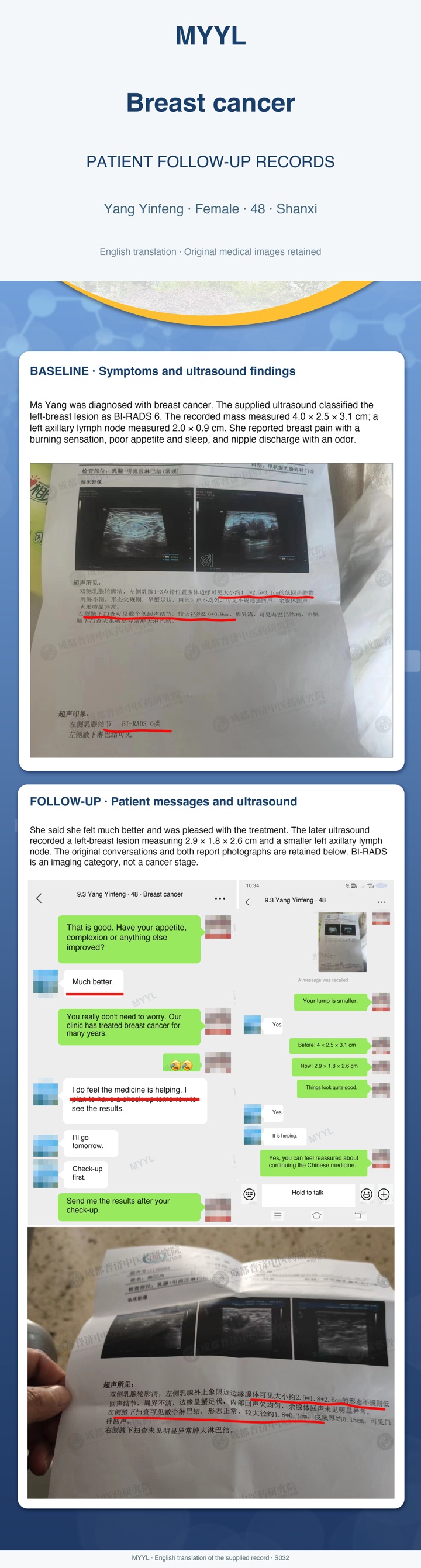
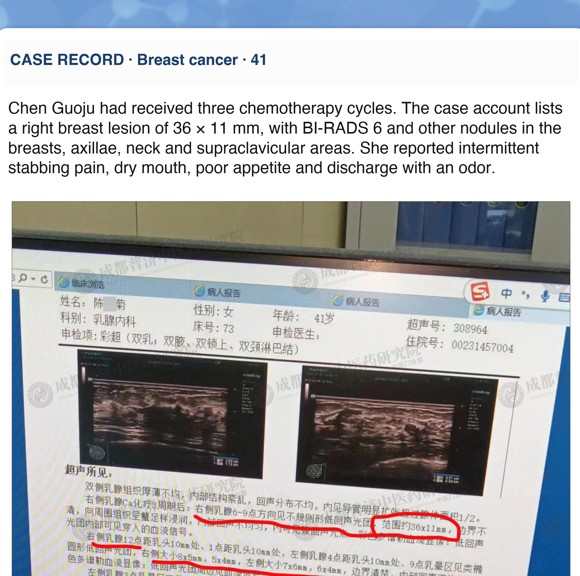
A smaller measured breast lesion
Yang described better appetite and general wellbeing during follow-up.
 1 source image
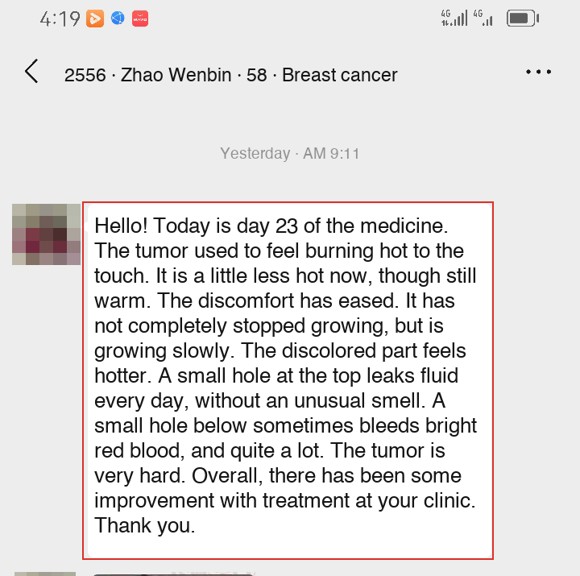
Follow-up after chemotherapy and Chinese medicine
Chen had received three chemotherapy cycles before the traditional Chinese medicine care described in the case.
 1 source image
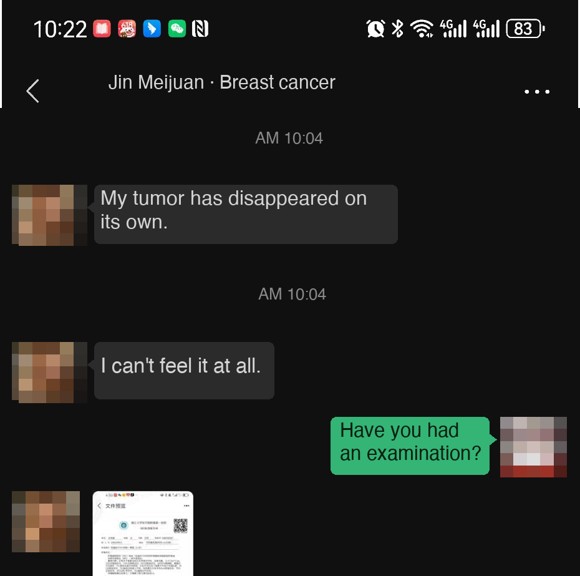
Less heat and discomfort, with bleeding continuing
On day 23, Zhao said the breast mass felt less hot and discomfort had eased.
 1 source image
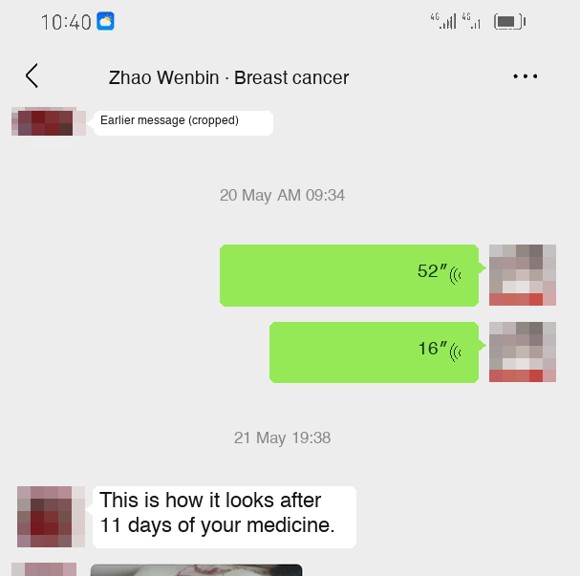
A lump felt smaller, while a lesion was still reported
The archive records right breast invasive ductal carcinoma, grade II, diagnosed after a lump was noticed in March 2025.
 1 source image
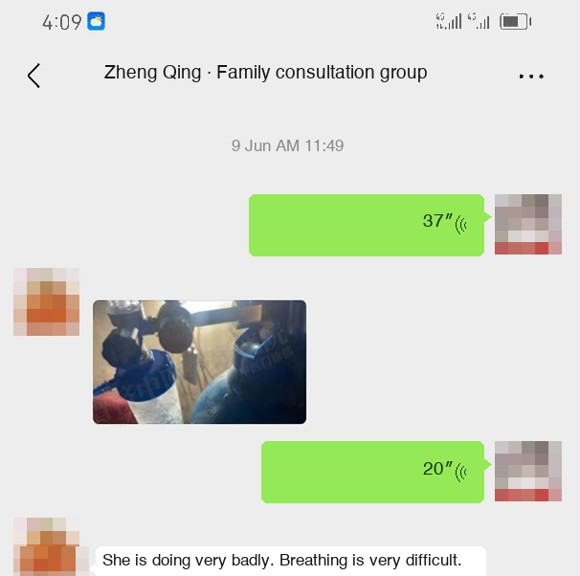
A later update on the breast wound
This later compilation describes approximately 42 days of medication.
 1 source image
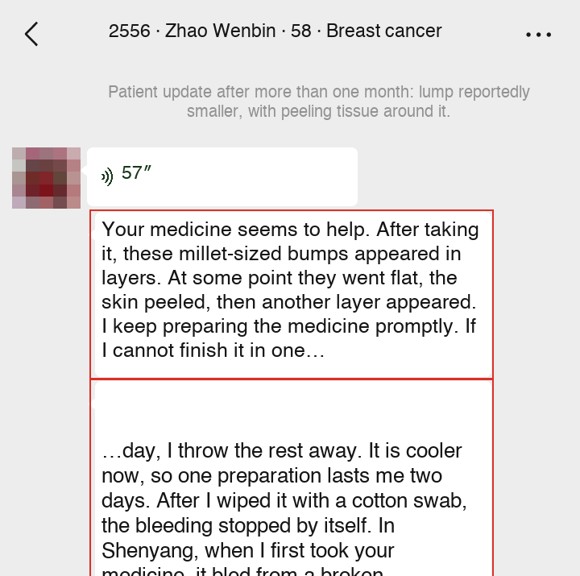
Changing symptoms during oxygen-supported care
The family described severe breathlessness, cough, fever and weakness in a patient with metastatic breast cancer who was receiving oxygen and other medical treatment.
 3 source images
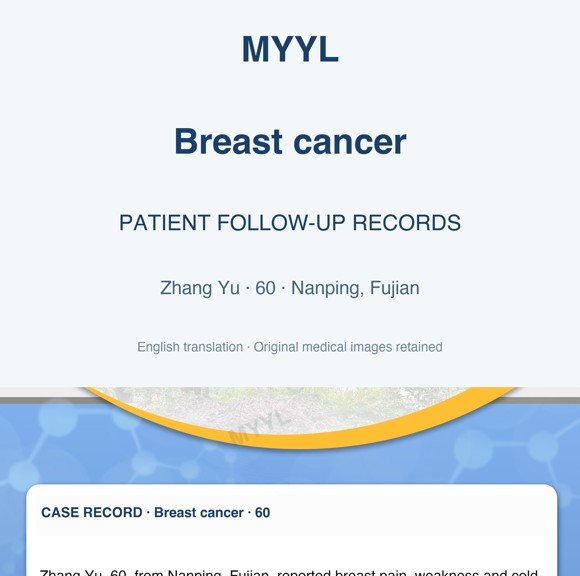
Eating again, with ongoing wound concerns
Across three voice-message transcripts, Zhao described being able to eat again and feeling better in daily life.
 1 source image
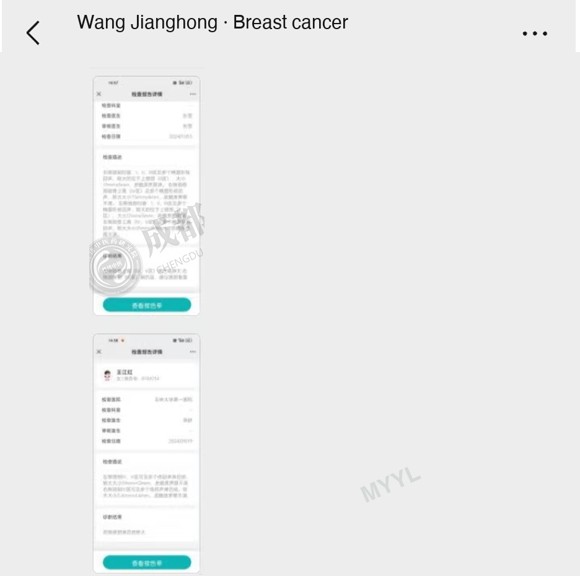
Breast and axillary findings on follow-up
The case narrative describes breast pain, weakness and cold hands and feet at presentation.
 1 source image
A scan comparison after chemotherapy
Wang shared examination results after chemotherapy followed by traditional Chinese medicine.
 1 source image
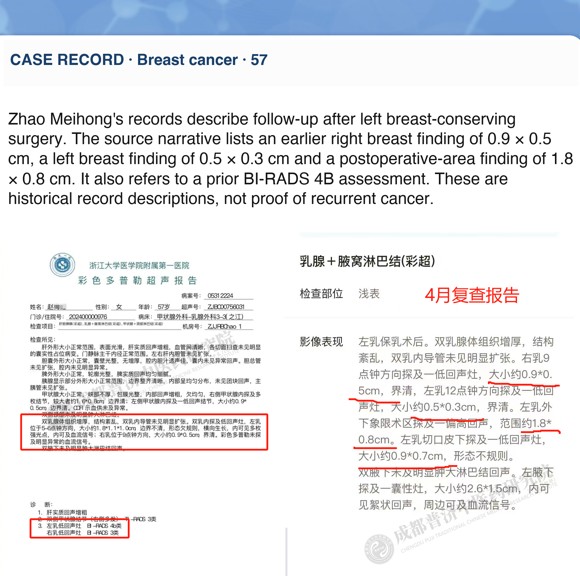
Follow-up after breast-conserving surgery
The records describe follow-up after left breast-conserving surgery.
 1 source image
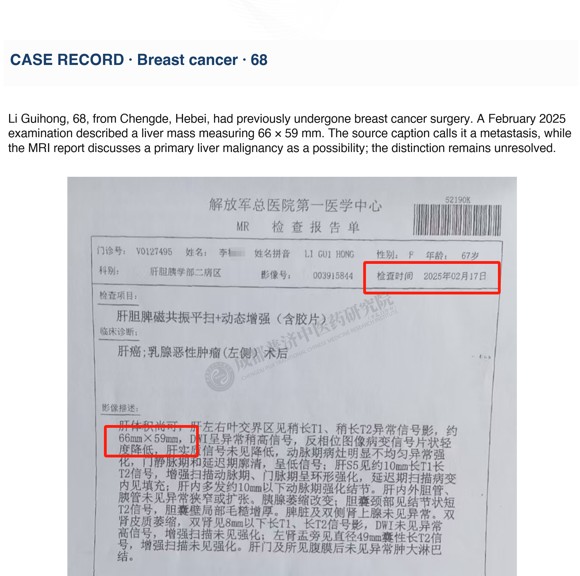
A liver lesion followed after breast cancer surgery
The case combines a history of breast cancer surgery with serial liver imaging and a history of targeted therapy in the later report.
 1 source image
Reported pain relief after a difficult first visit
The source narrative describes a painful swollen breast mass and continuing use of pain medication at presentation in mid-November 2025.
 1 source image
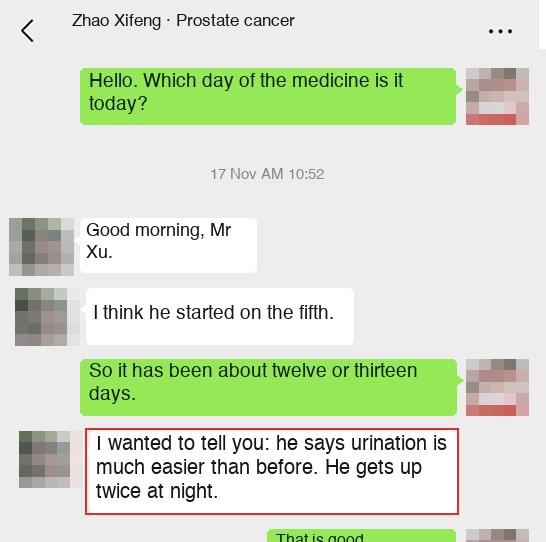
Easier urination and fewer night-time trips
The family described easier urination and fewer night-time trips to the toilet after about twelve or thirteen days of medication.
 1 source image
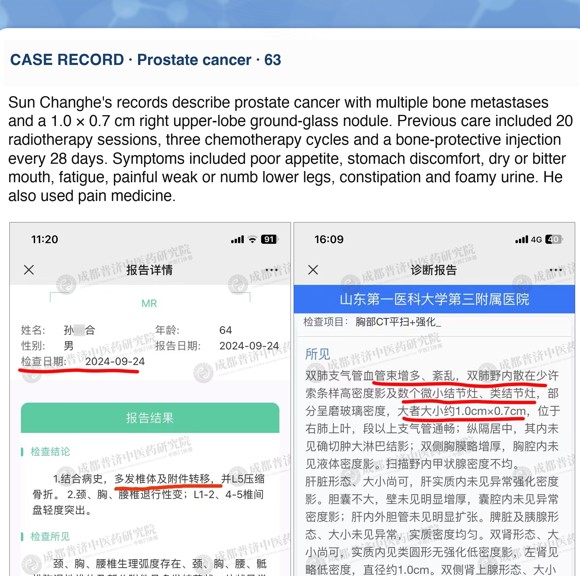
Follow-up imaging with persistent bone disease
Sun's history includes twenty radiotherapy sessions, three chemotherapy cycles, bone-directed injections and pain medication.
 1 source image
PET/CT follow-up after duodenal cancer surgery
A March 17, 2026 PET/CT was compared with February 14, 2025 after surgery for duodenal cancer.
 1 source image
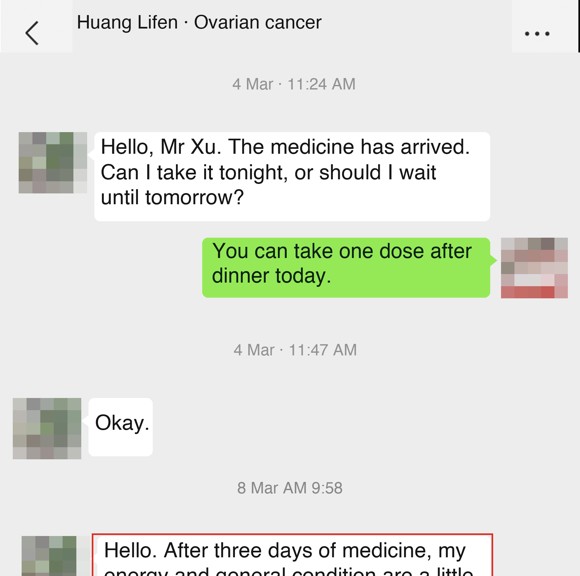
Walking felt easier, while coughing persisted
Huang, recorded as having ovarian cancer with lung involvement, reported better energy after three days of medication.
 1 source image
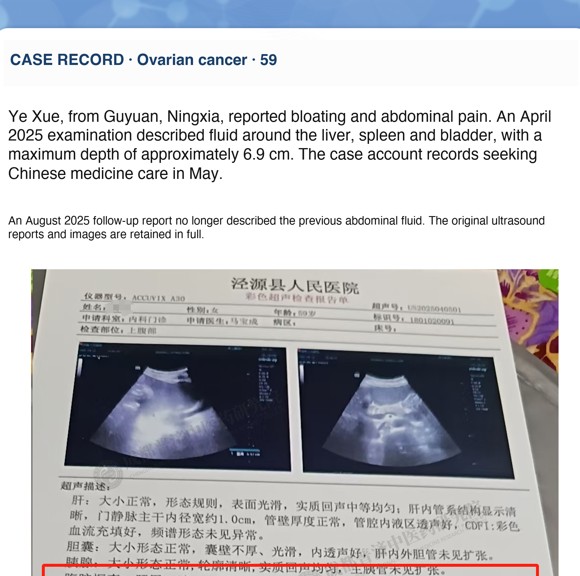
Ascites documented on two ultrasound examinations
The source describes abdominal pain and distension in a patient recorded as having ovarian cancer.
 1 source image
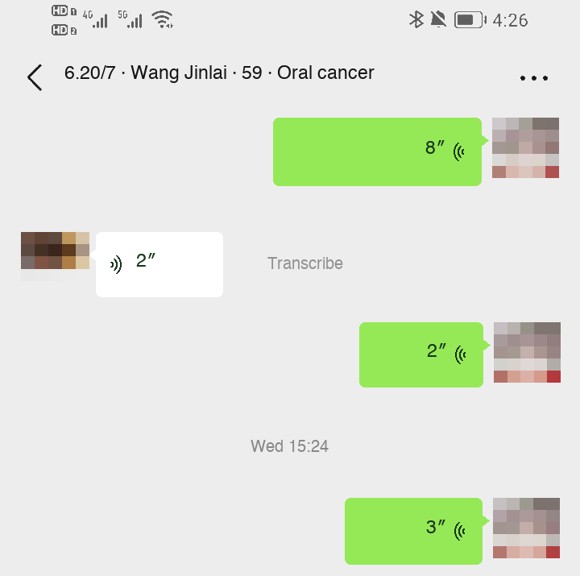
A brief oral-lesion follow-up
The supplied screenshot contains several voice messages but only a short visible transcript relating to the oral lesion.
 1 source image
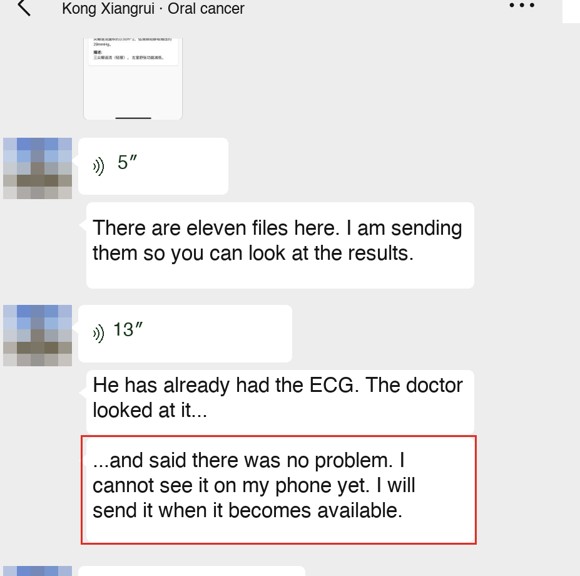
More regular bowel movements during follow-up
Kong's family described a small improvement in bowel movements after a prescription adjustment: previously hard, small stools every couple of days, later small amounts almost daily.
 1 source image
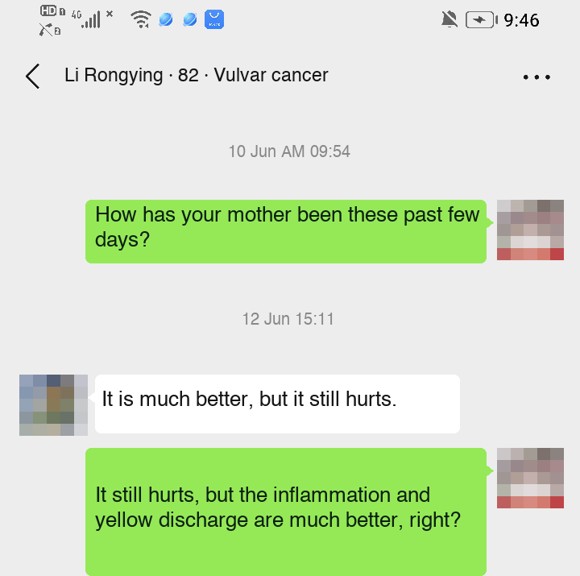
Less discharge, with pain still present
In the June 12 follow-up, the family said yellow discharge and inflammation had improved, but a small lump and pain remained.
 1 source image
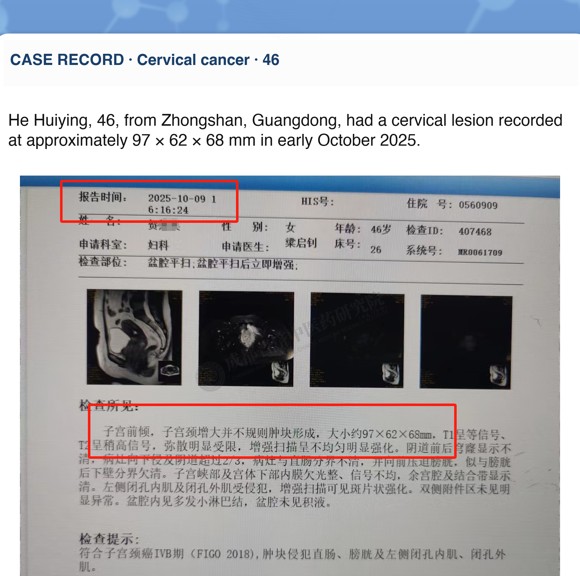
Two pelvic MRI descriptions requiring careful comparison
The first supplied report describes a cervical mass measuring 97 × 62 × 68 mm with extensive local involvement.
 1 source image
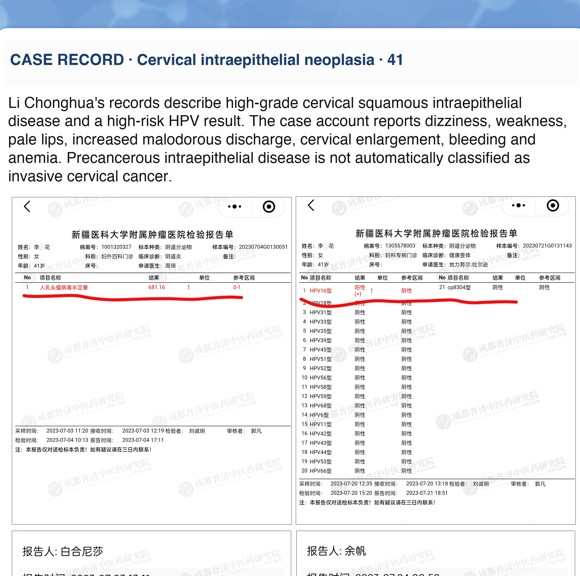
Cervical screening and pathology follow-up
The earlier pathology records high-grade squamous intraepithelial changes, including CIN II with gland involvement.
 1 source image
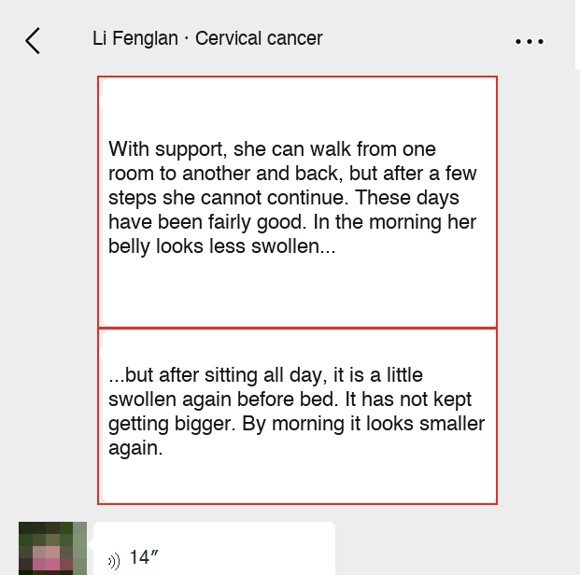
Smaller lung nodules, with new nodules also reported
Li had a history of cervical cancer and reported abdominal discomfort, breathlessness and fatigue.
 1 source image
Daily care became easier
Li's caregiver and family described less abdominal distension and pain, more strength and improved sleep during December follow-up.
 1 source image
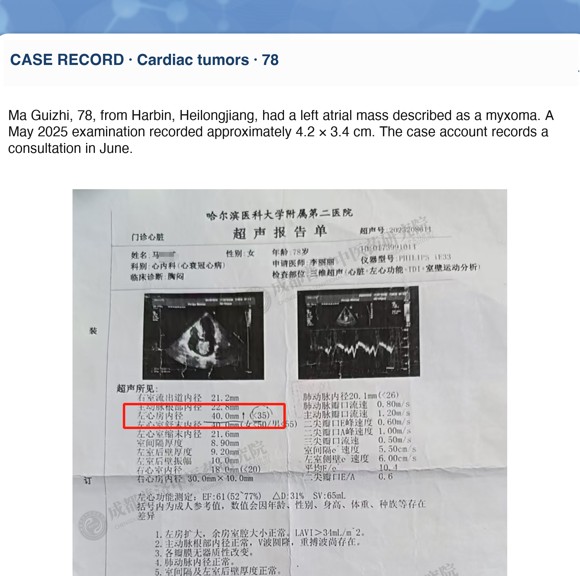
A left atrial mass on serial echocardiography
Two echocardiography reports from the Second Affiliated Hospital of Harbin Medical University describe a left atrial mass considered possibly a myxoma.
 1 source image
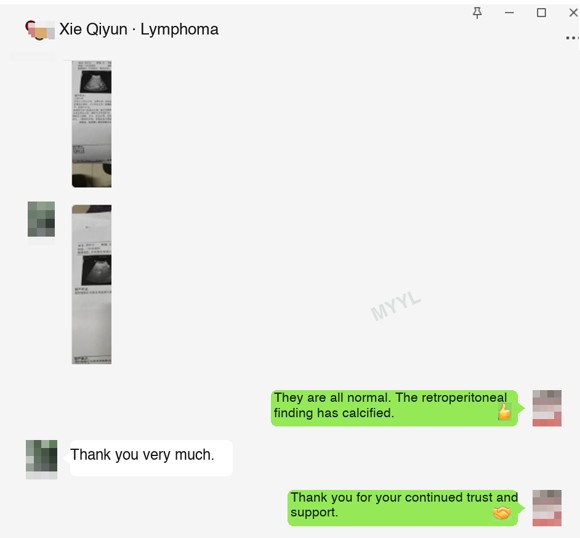
Retroperitoneal nodes on serial ultrasound
The case compilation includes abdominal and retroperitoneal lymph-node ultrasound findings in a patient with lymphoma.
 2 source images
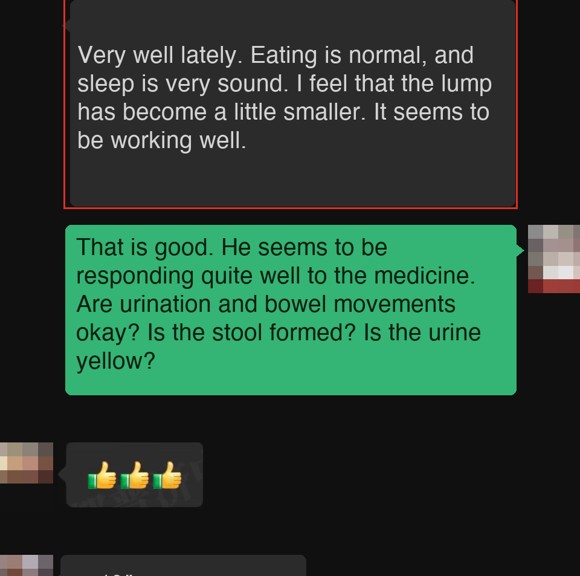
Eating and sleeping well, with leg weakness remaining
The family described normal eating, settled sleep and a lump that felt smaller.
 3 source images
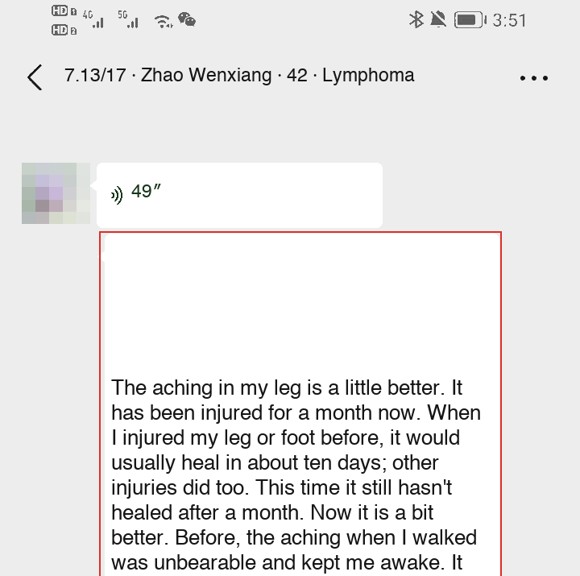
Less pain when resting and opening the mouth
Around day seven, Zhao described some relief in leg soreness and improved ability to sleep.
 1 source image
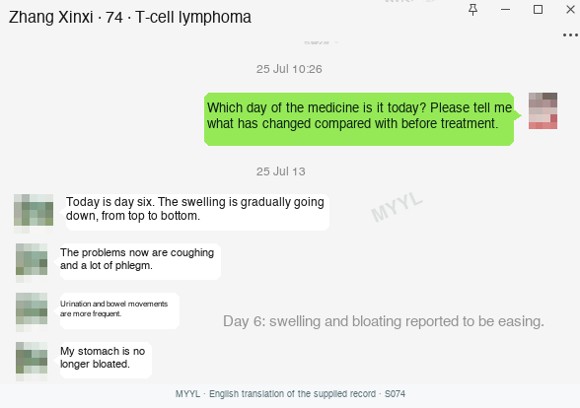
Swelling eased while cough and sputum continued
On July 25, 2025, the family reported day six of medication.
 1 source image
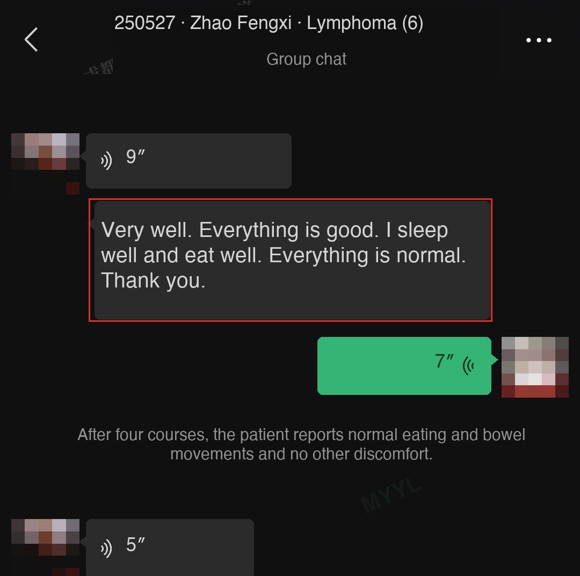
A later update on everyday wellbeing
In a later voice-message transcript, Zhao described good appetite and sleep and said urination and bowel movements were normal.
 1 source image
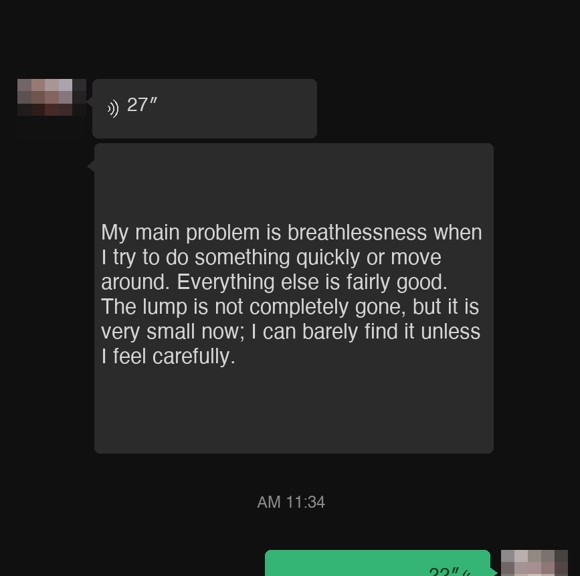
Neck-node measurements and residual breathlessness
The compilation compares neck ultrasound findings from February and December 2025.
 1 source image
A family report of a softer axillary lump
The archive describes high-grade B-cell lymphoma with a painful axillary mass.
 1 source image
Wound symptoms after surgery and radiotherapy
The case narrative describes right upper gingival squamous cell carcinoma with neck-node involvement, treated with surgery and thirty-one radiotherapy sessions.
 1 source image
Small thyroid nodules on follow-up
Zhang had undergone thyroid surgery about ten years earlier.
 1 source image
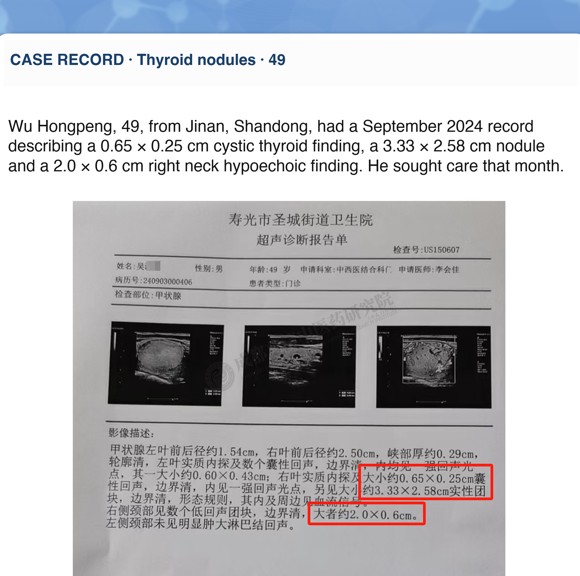
Thyroid nodules remained visible
A September 2024 ultrasound describes cystic thyroid nodules and a right solid nodule classified as TI-RADS 3.
 1 source image
A mixed neck-ultrasound comparison
After right thyroid surgery, the supplied records describe a right neck mass and small findings in the remaining thyroid tissue.
 1 source image
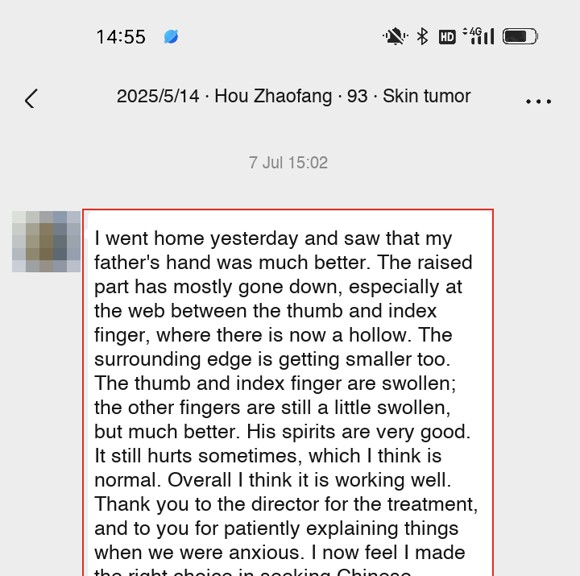
A family observation of the hand wound
In a July 7, 2025 message, Hou's child described a lower profile to the raised area on the hand and a smaller edge around the wound near the thumb web.
 1 source image
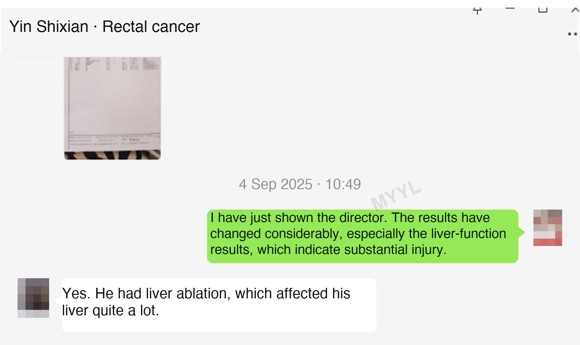
Liver tests after an ablation procedure
The record describes rectal cancer with liver involvement and a preceding liver ablation.
 1 source image
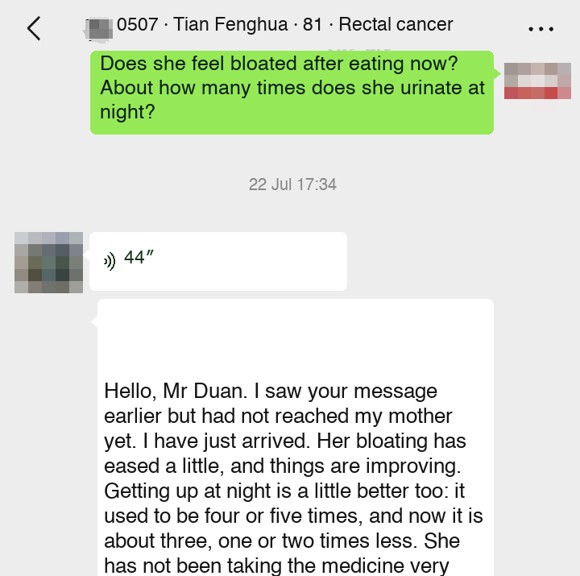
Fewer night-time trips to the toilet
In the July 22 follow-up, Tian's family said abdominal bloating had eased a little and night-time urination had decreased from four or five times to about three.
 1 source image
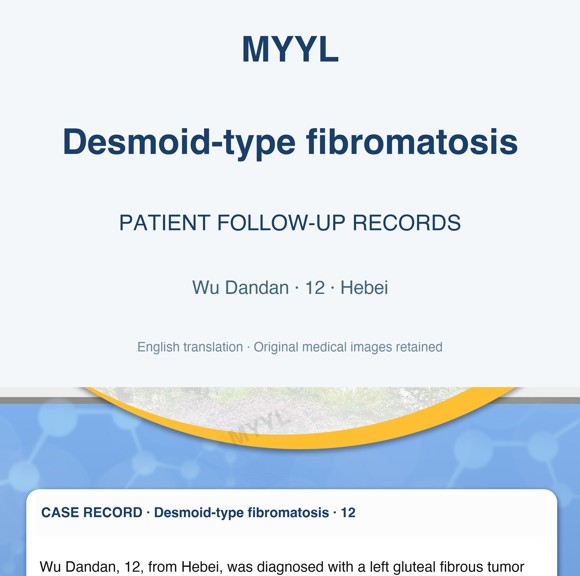
Desmoid-type fibromatosis on serial MRI
The reports describe a left gluteal soft-tissue mass, later identified as desmoid-type fibromatosis.
 1 source image
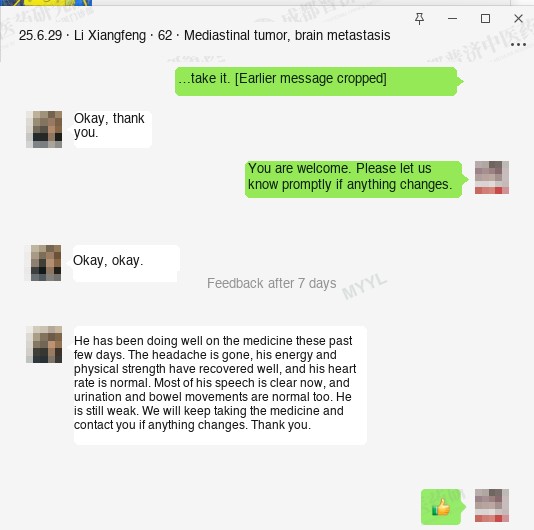
A family update on speech and energy
The archive records a mediastinal tumor with brain involvement.
 1 source image
Postoperative follow-up of a germ-cell tumor
The source includes a February 2021 ultrasound showing bilateral adnexal masses, a history of surgery, and a July 28, 2025 ultrasound reporting no abnormal adnexal echoes.
 1 source image
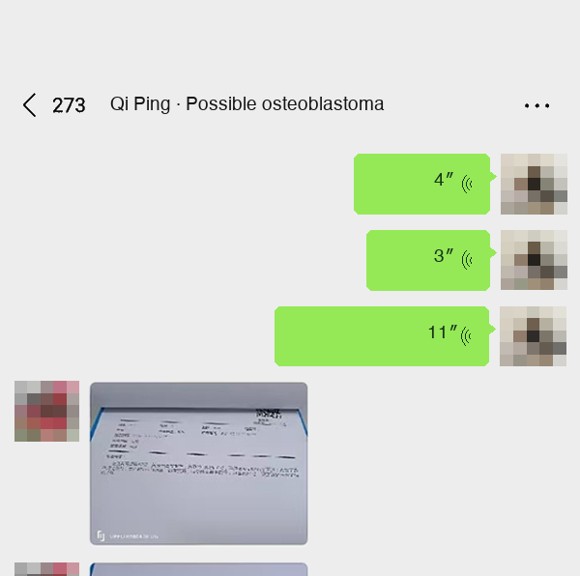
Knee symptoms and a distal femoral finding
The record describes knee-region pain, weakness, local heat and limited activity.
 1 source image
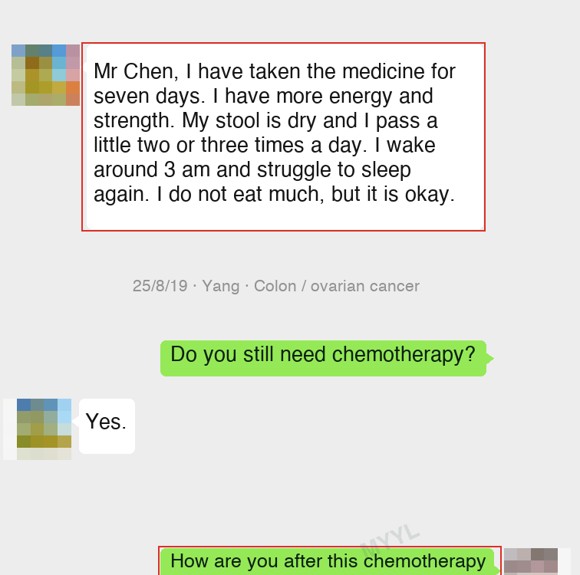
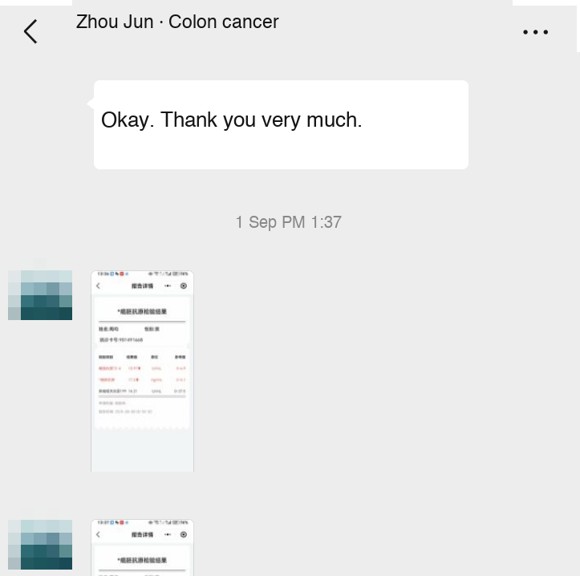
More energy during combined postoperative care
After surgery for colon and ovarian cancers, Yang described fatigue, poor sleep and lower-back aching when lying for long periods.
 1 source image
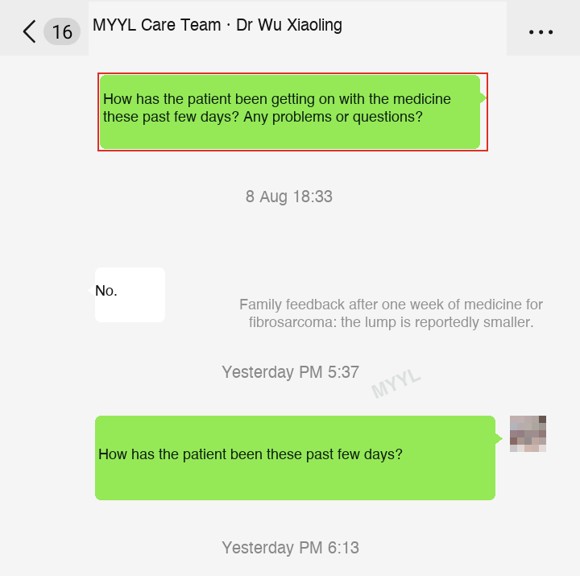
CEA results across two follow-ups
Zhou's case narrative describes cough, abdominal pain and frequent bowel movements at presentation.
 1 source image
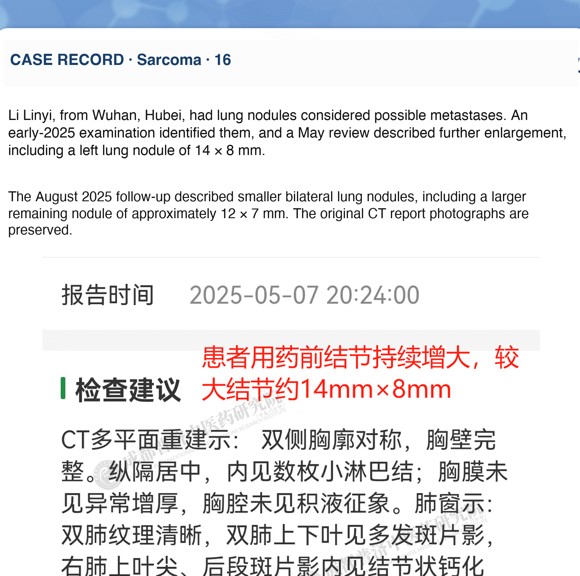
A smaller-feeling lump, with pain at the surgical site
A follow-up in the fibrosarcoma archive reports no general discomfort and a lump that appeared smaller, while pain remained at the previous surgical wound.
 1 source image
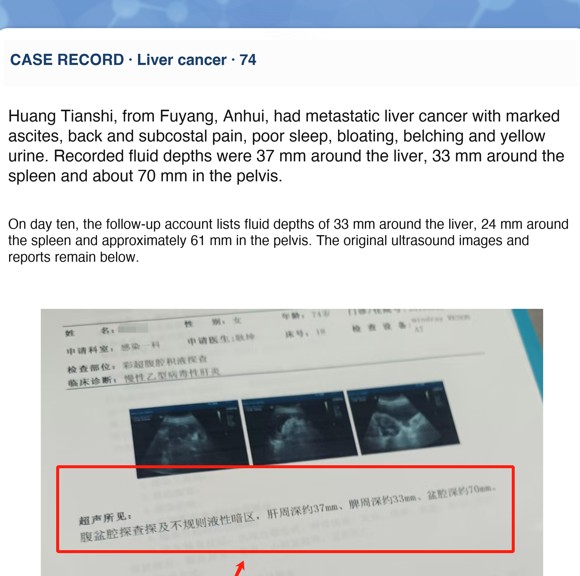
Lung-nodule follow-up in an osteosarcoma record
The May 2025 CT describes multiple lung findings, including a left upper-lobe nodule measuring 14 × 8 mm.
 1 source image
Ascites measurements at two visits
The case narrative describes liver cancer with abdominal fluid, back and subcostal pain, bloating and poor sleep.
 1 source image
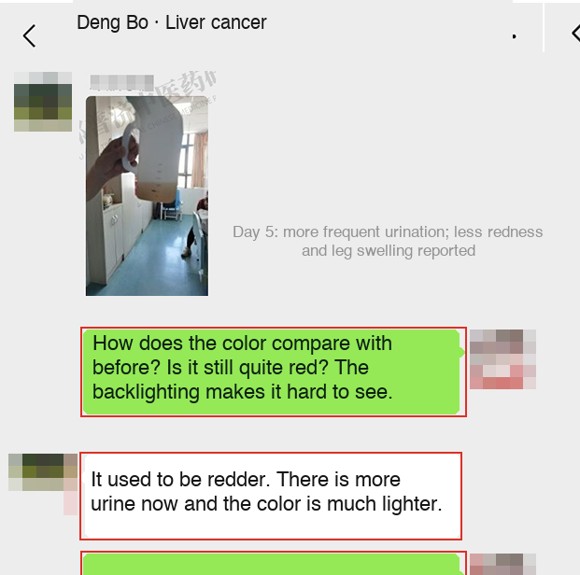
Less leg swelling, with symptoms still changing
The family described reduced thigh and calf swelling by day five, then easier walking and more regular bowel movements around day ten.
 1 source image
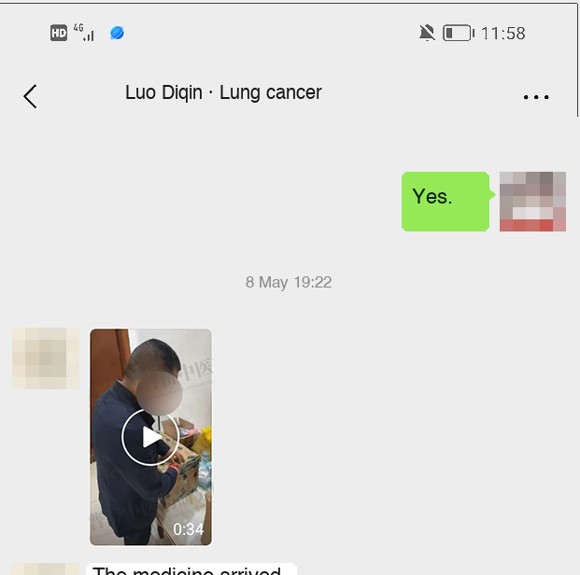
A lung-cancer follow-up after targeted treatment
Luo's history includes more than two years of targeted treatment in a clinical trial and reported drug resistance.
 1 source image
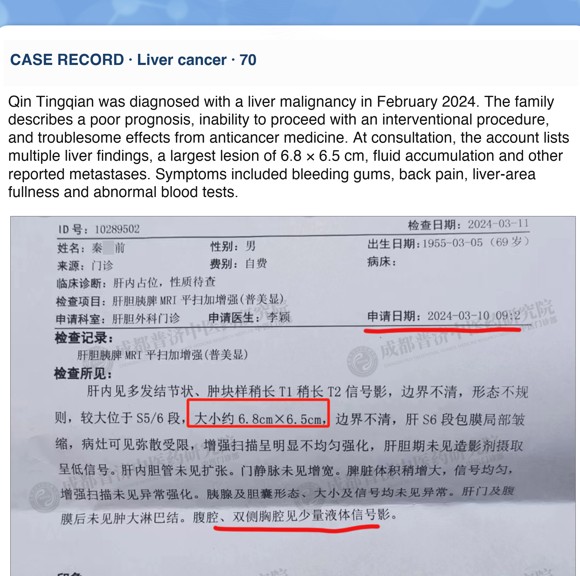
A liver-lesion record with an intervening increase
Qin's record includes prior anticancer medication, symptoms such as gum bleeding and abdominal discomfort, and a series of liver examinations.
 1 source image
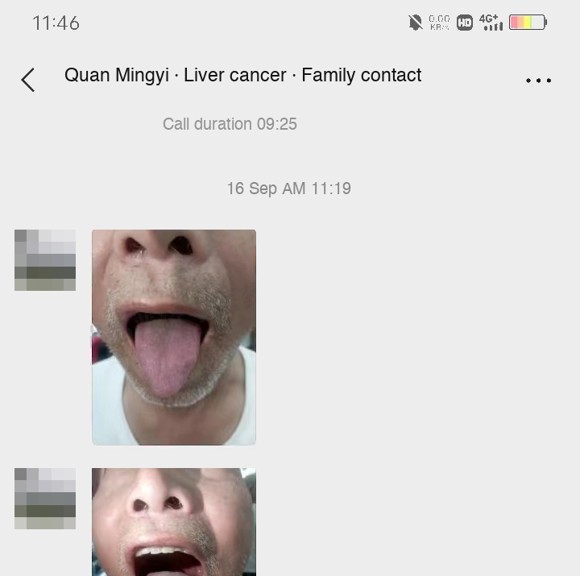
Normal daily activities and a small weight gain
The family's September 16 message describes normal eating and sleep, no current discomfort and a gain of two jin, approximately one kilogram.
 2 source images
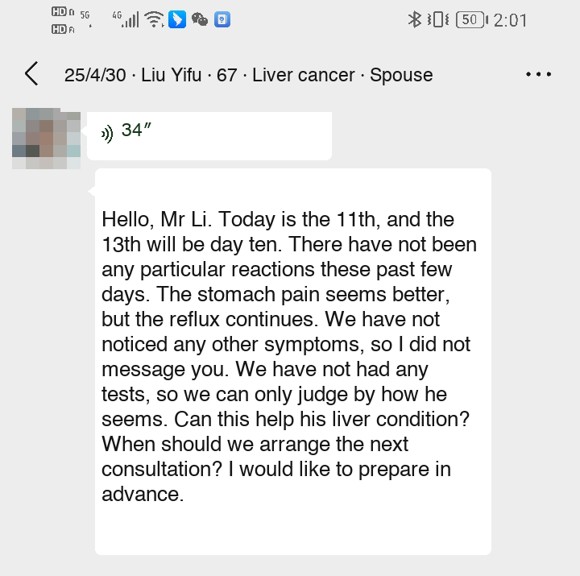
Less stomach pain, while reflux continued
Liu's spouse reported that stomach pain had improved, but reflux persisted.
 1 source image
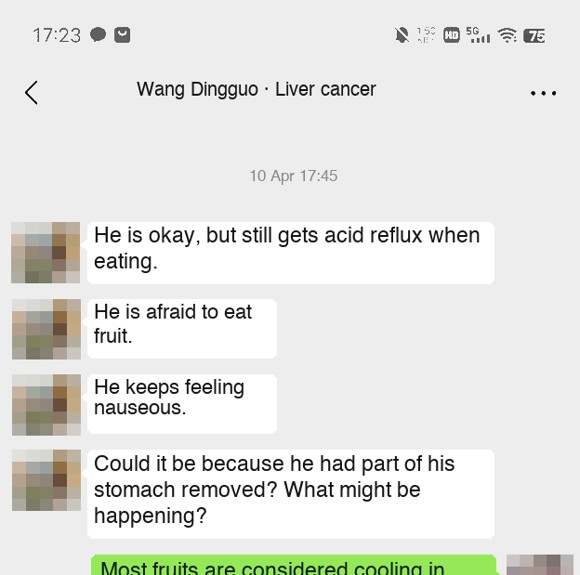
Postoperative digestive symptoms on follow-up
Wang had undergone partial right liver resection and a biliary-enteric anastomosis.
 1 source image
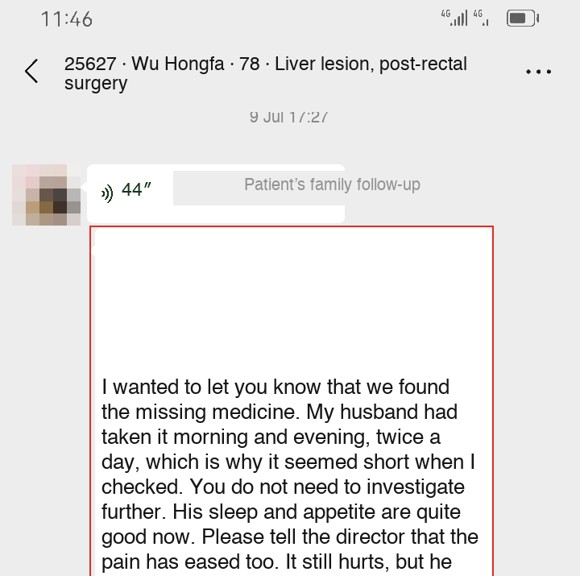
Pain eased but had not stopped
The archive describes a liver mass in a patient with previous rectal surgery.
 2 source images
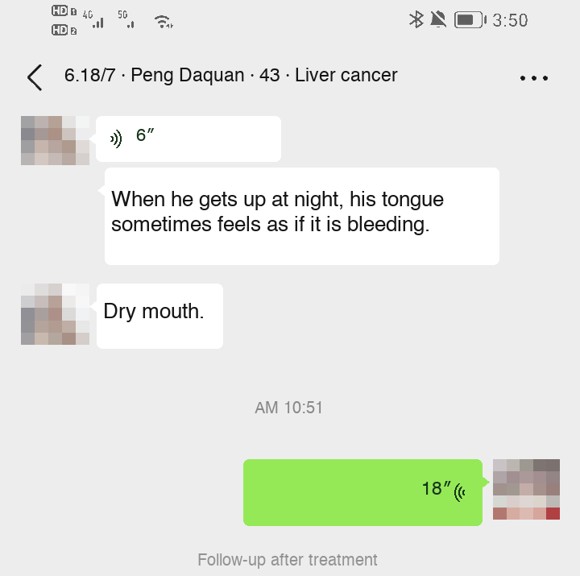
A little better appetite during hospital care
Peng's wife described a little more energy and no vomiting over the preceding two days.
 1 source image
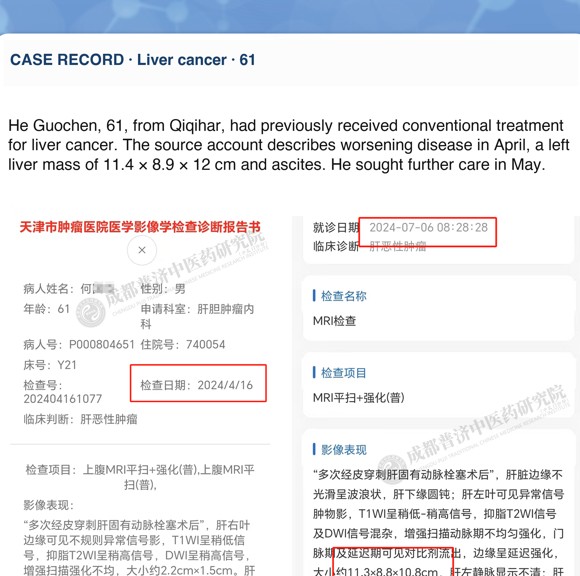
Liver imaging after arterial embolization
The source describes liver cancer, hepatitis B, cirrhosis, fluid accumulation and bone involvement.
 1 source image
A main liver mass decreased while disease remained
The MRI reports explicitly refer to repeated hepatic arterial embolization.
 1 source image
Digestive symptoms and a liver-lesion follow-up
The narrative describes low platelets, high bilirubin, low protein and marked ascites at presentation.
 1 source image
A liver follow-up with several treatments in the history
Cai's records include liver resection, radiofrequency ablation, targeted treatment and, by the later CT, an interventional liver procedure.
 1 source image
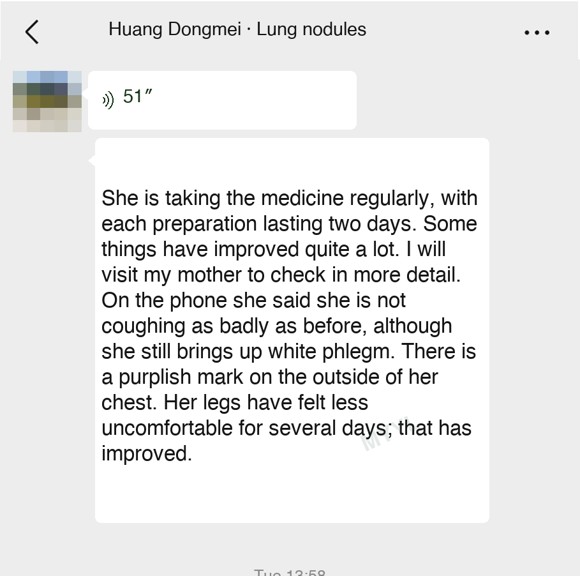
A new lung nodule was no longer visible on follow-up
Huang had multiple lung nodules, cough, sputum, breathlessness and leg discomfort.
 1 source image
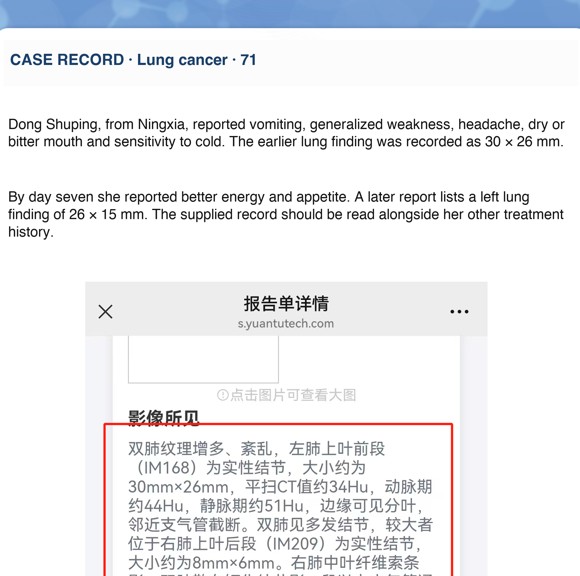
Better appetite, with two different imaging methods
The narrative describes vomiting, fatigue, headache, dry mouth and feeling cold before consultation.
 2 source images
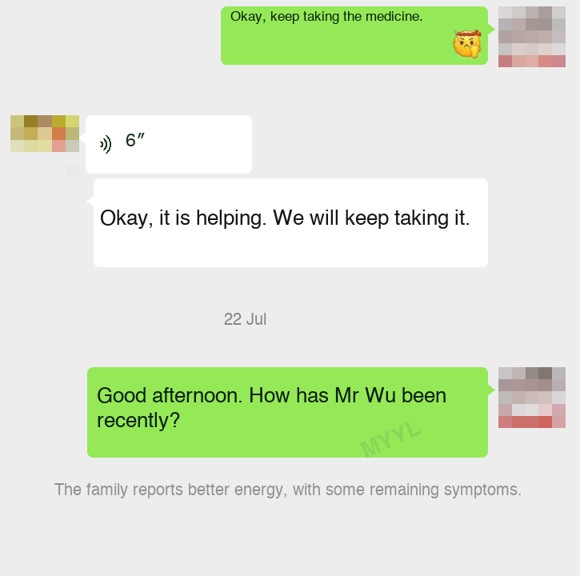
More energy, with burning and a rash still reported
In the July 22 follow-up, Wu's family described better energy.
 1 source image
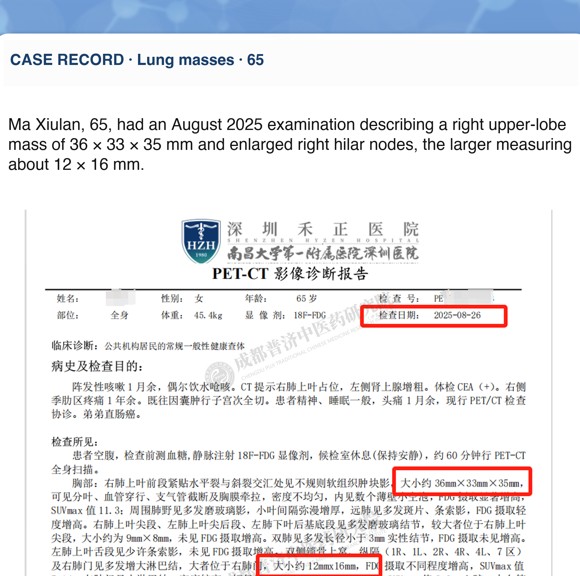
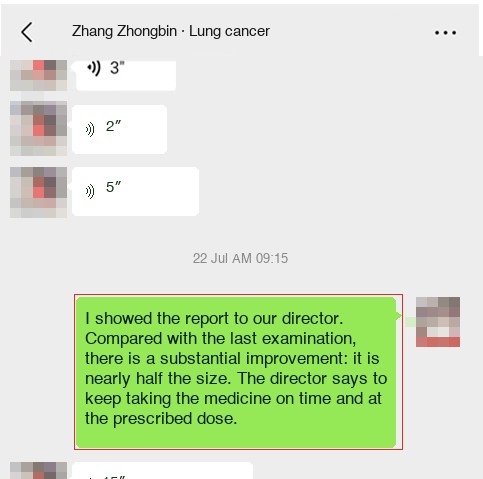
A smaller lung mass with other findings still under follow-up
The August 2025 PET-CT described a right upper-lobe mass and enlarged thoracic lymph nodes.
 1 source image
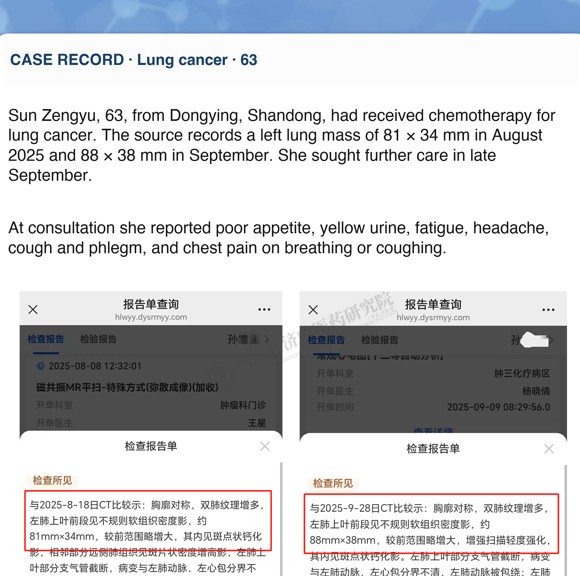
A later lung and lymph-node follow-up
The narrative describes chest tightness, shortness of breath and rib and back pain at presentation.
 1 source image
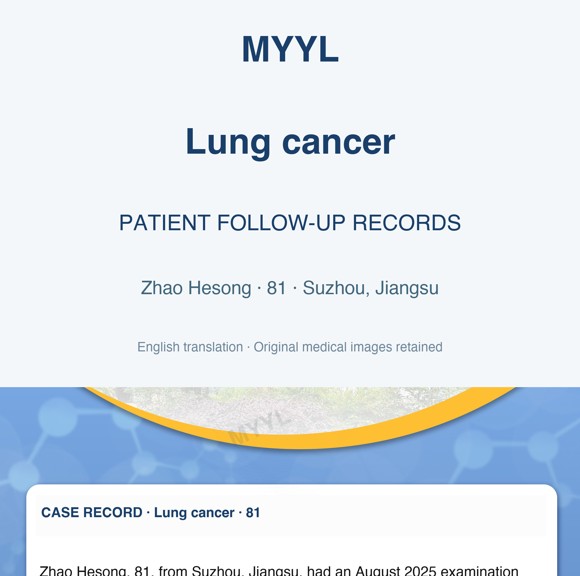
A smaller measured lung lesion, with extensive findings remaining
Sun had chemotherapy before seeking the care described in this archive.
 1 source image
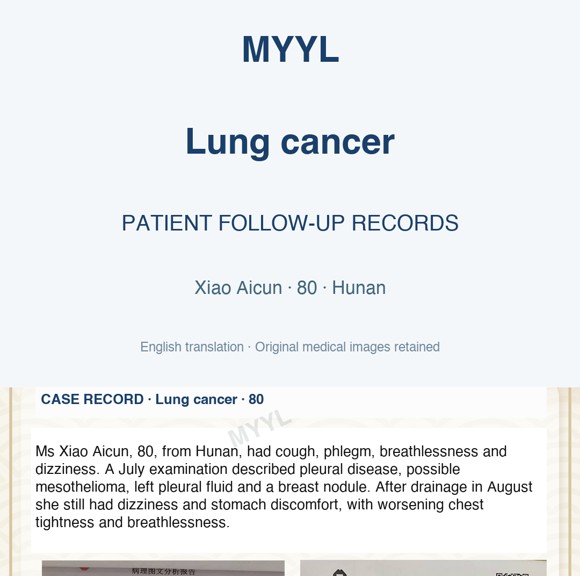
Interval improvement on a chest CT comparison
The April 4, 2026 CT explicitly compares the right lower-lobe mass with August 14, 2025 and describes marked reduction.
 1 source image
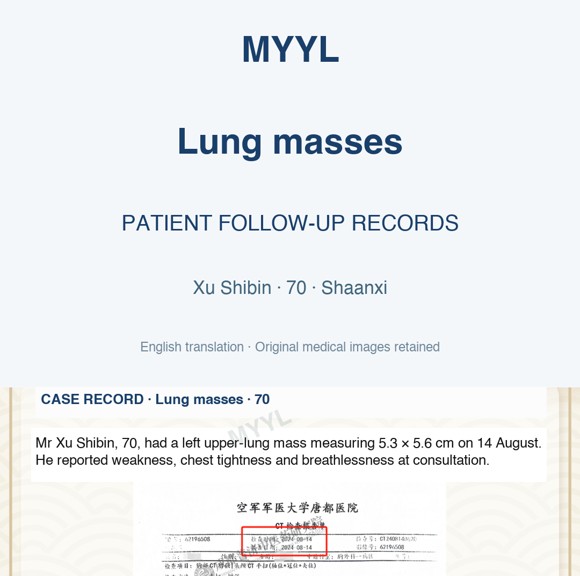
Breathing felt easier, while mobility remained limited
Xiao had a pleural malignancy assessment and drainage of pleural fluid before this follow-up.
 1 source image
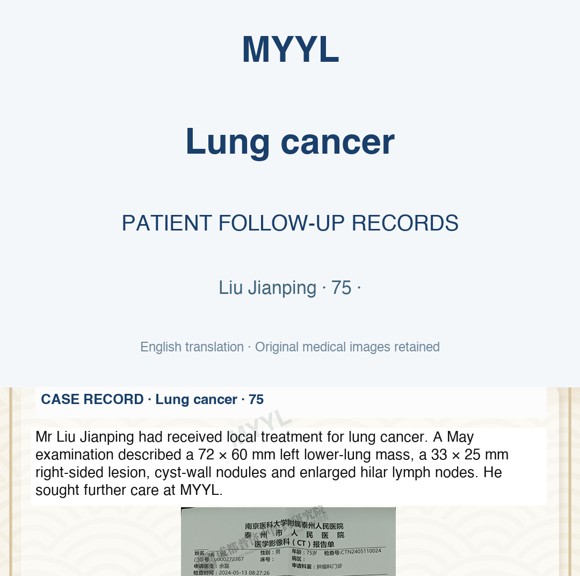
Lung measurements and a symptom update
The August 14 imaging described a left upper-lobe mass and other thoracic abnormalities.
 1 source image
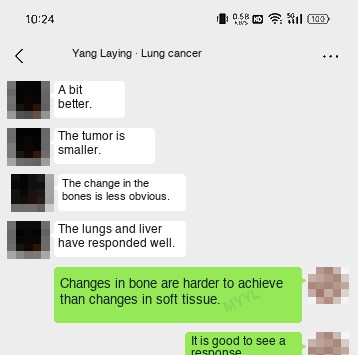
A lung-imaging comparison requiring lesion matching
The earlier narrative describes large findings in both lungs.
 1 source image
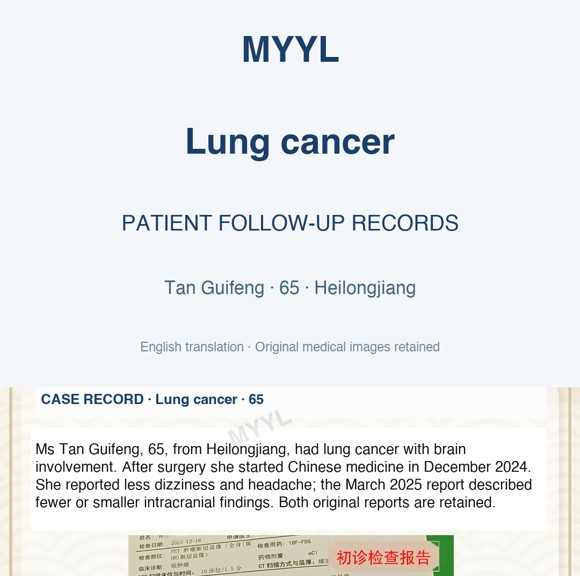
A metastatic lung-cancer follow-up with unresolved source details
The case describes lung cancer with liver and bone involvement.
 1 source image
Fewer brain lesions after a history that includes surgery
Tan's record includes surgery for a right orbital mass before follow-up for lung cancer with suspected brain metastases.
 1 source image
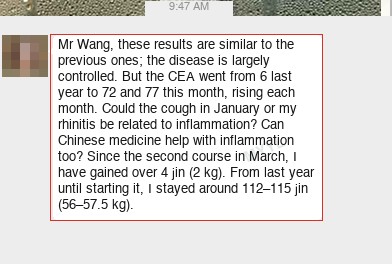
Weight gain despite a continuing rise in CEA
Qiu reported gaining more than four jin, about two kilograms, after a long period of little weight change.
 1 source image
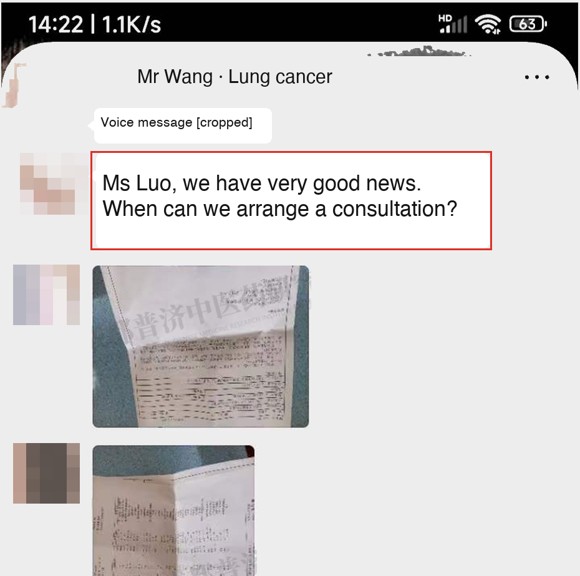
A family shares a better follow-up result
The accompanying text identifies the patient only as Mr Wang.
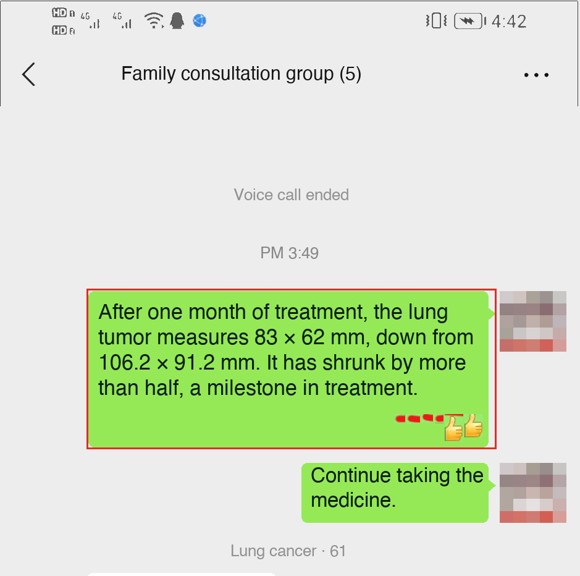 1 source image
A smaller lung mass, but poor appetite and weakness persisted
The June 29, 2023 CT described a right upper-lobe mass.
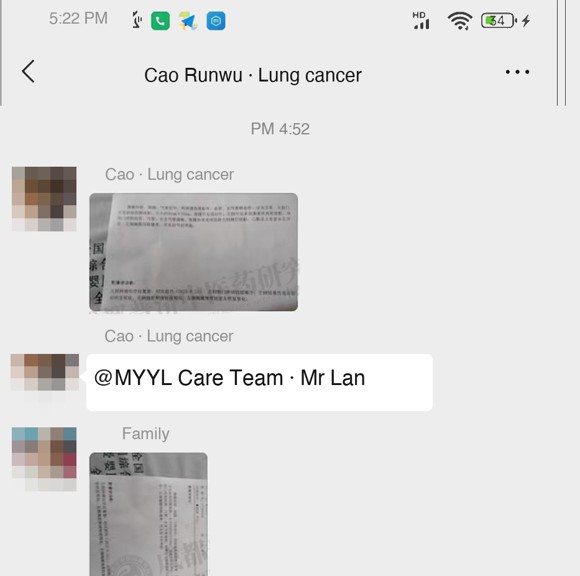 1 source image
A lung follow-up after chemotherapy
Cao had received chemotherapy before this account and reported poor appetite, weakness, pain and blood-streaked sputum.
 1 source image
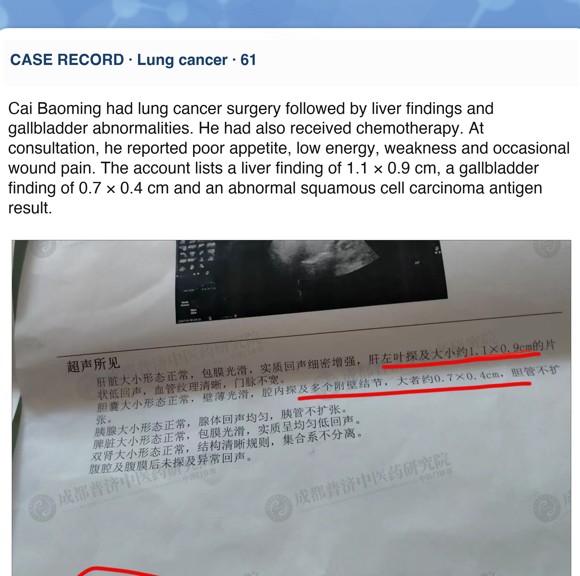
Ultrasound findings after lung surgery and chemotherapy
Cai's history includes lung surgery and chemotherapy.
 1 source image
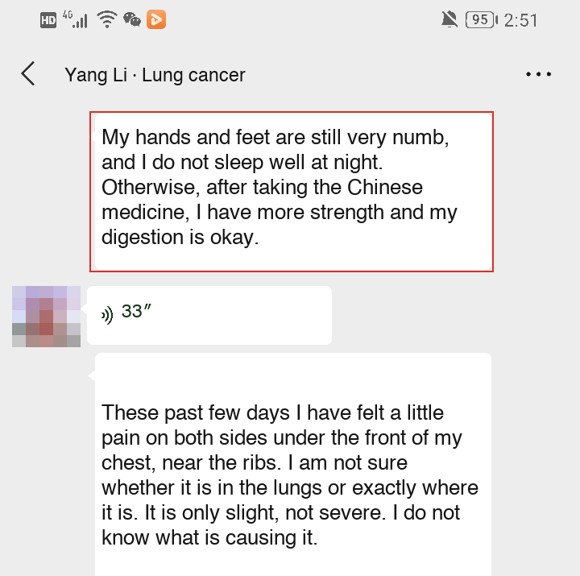
More energy, with numbness and poor sleep continuing
Yang described more strength, better appetite and more comfortable digestion after starting the medicine.
 1 source image
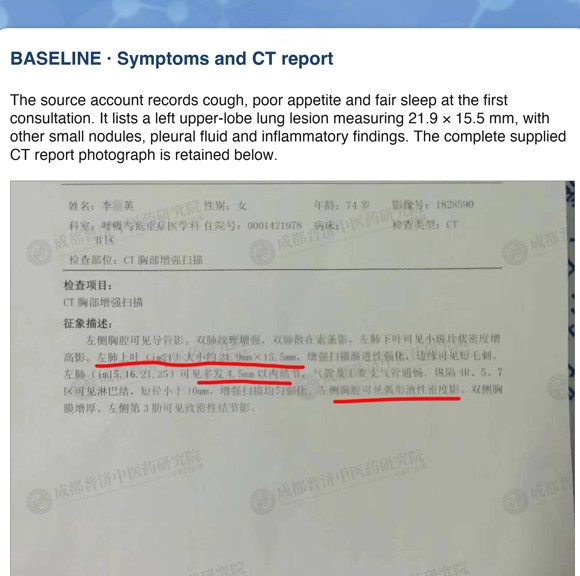
A mixed chest-imaging result
The source narrative reports improved symptoms and a smaller left upper-lobe finding.
 3 source images
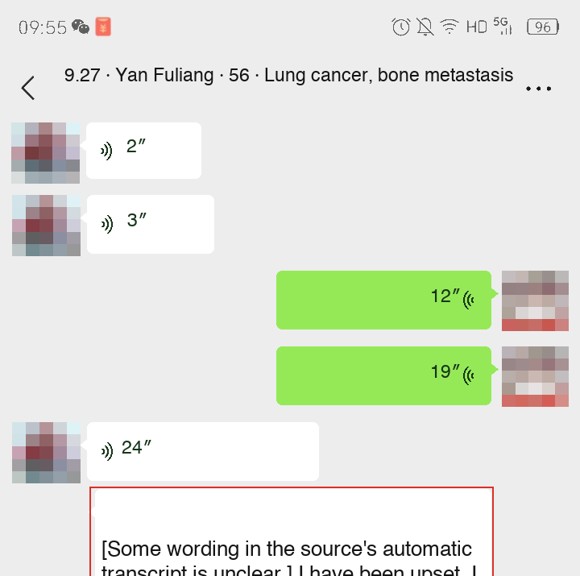
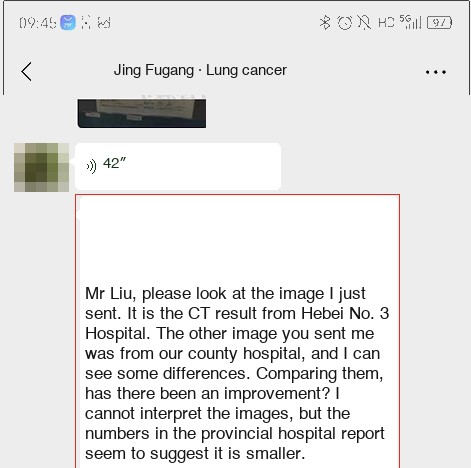
Small gains in movement and sleep after surgery
The accompanying text describes lung cancer with bone metastases, prior surgery and further treatment, followed by severe difficulty walking and sleeping.
 1 source image
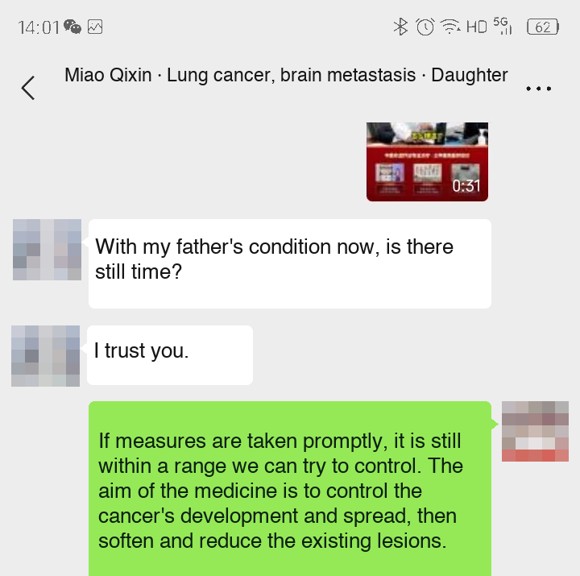
A lung follow-up with residual lymph nodes
The narrative describes cough, sputum, breathlessness, pain at night and poor sleep and appetite.
 4 source images
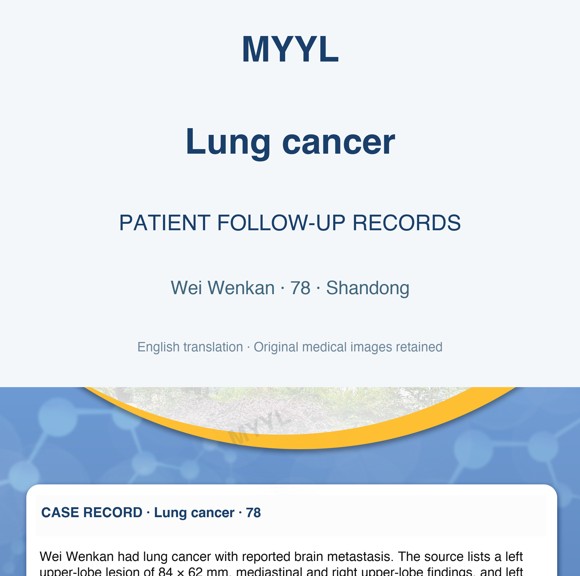
Early changes noticed by a worried family
Miao's family described a little improvement by the fourth day, while substantial weakness remained.
 1 source image
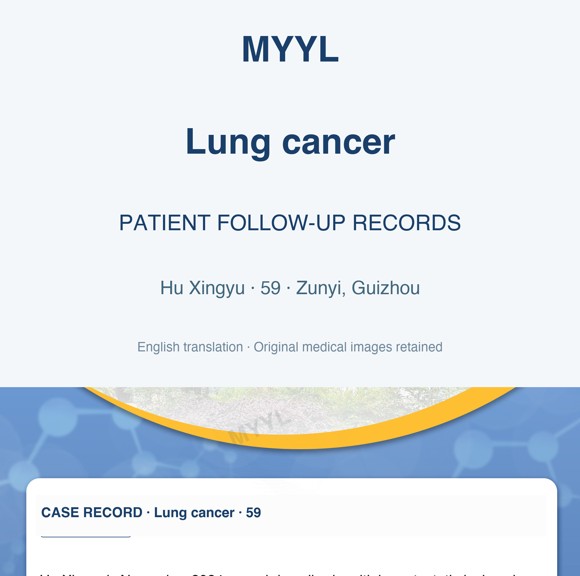
A smaller lung measurement, with brain findings needing confirmation
The May 4 and June 6, 2025 chest CT reports give different dimensions for the left upper-lobe mass.
 1 source image
Serial brain imaging and reported symptom changes
The November 15, 2024 contrast MRI described multiple brain metastases.
 1 source image
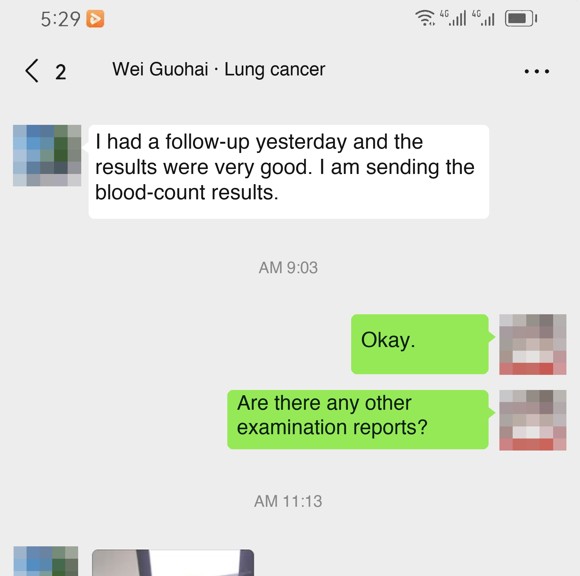
A patient reports a better review after chemotherapy
Wei's history includes chemotherapy.
 1 source image
Follow-up of suspected pulmonary sequestration with infection
The February 21, 2025 CT favored pulmonary sequestration with infection, a different clinical context from confirmed lung cancer.
 1 source image
Digestive symptoms improved while some pain continued
The source describes lung cancer with suspected bone and brain involvement.
 1 source image
Postoperative follow-up with persistent thoracic findings
Hu had undergone surgery for lung cancer.
 1 source image
Smaller lesions alongside new findings
The narrative reports less itching and improved appetite and energy.
 1 source image
Follow-up of a granulomatous lung condition
The PET-CT favored chronic granulomatous inflammation, with sarcoidosis and tuberculosis considered in the differential diagnosis.
 2 source images
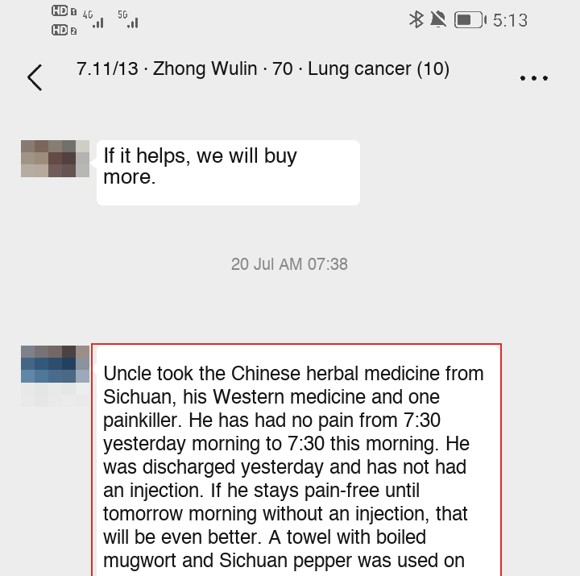
A pain update that includes a painkiller
Zhong described a period without pain while taking Chinese medicine, other medication and a painkiller.
 1 source image
A July lung-imaging review
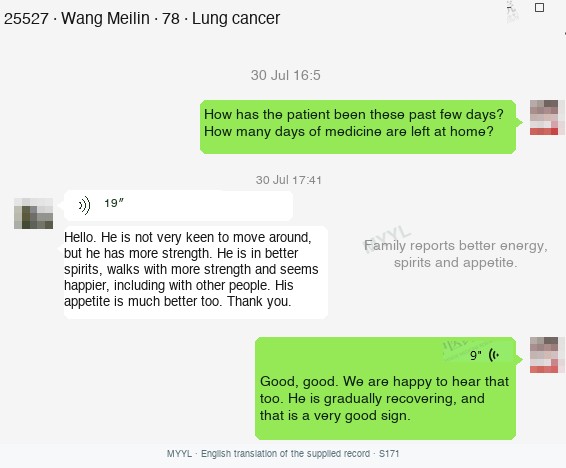
The family reported less chest tightness and breathlessness and discussed a July review with the care team.
 1 source image
More strength in the legs and more conversation
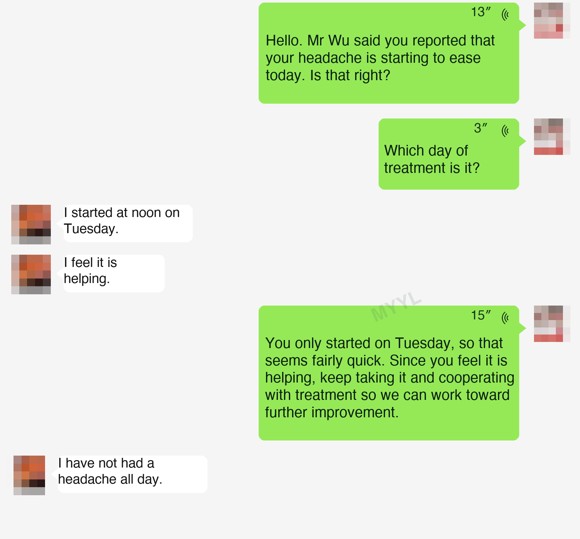
The July 30, 2025 family update describes a change noticed the previous afternoon: Wang seemed more alert, had more strength in his legs and was talking more.
 1 source image
Less headache, with dizziness still present
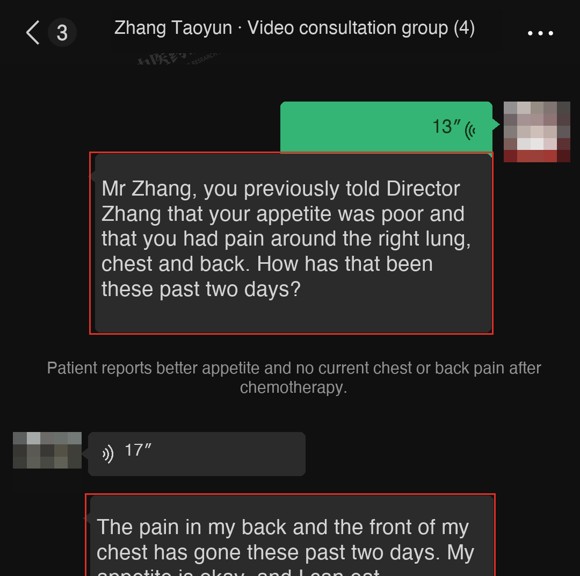
Li reported less headache and a better appetite soon after starting the medicine.
 1 source image
Chest and back pain eased between chemotherapy visits
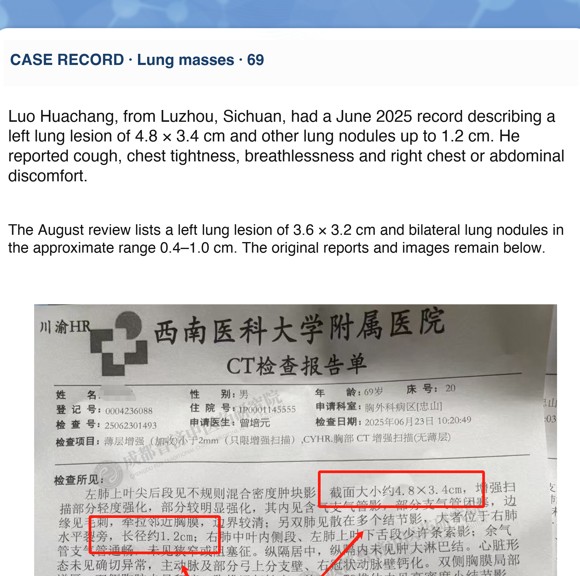
Following lung-cancer surgery and chemotherapy, Zhang said his chest and back were no longer hurting and he was eating reasonably well.
 1 source image
Follow-up of an indeterminate lung lesion
The June 23, 2025 CT considered lung cancer as one possibility but did not exclude inflammation.
 1 source image
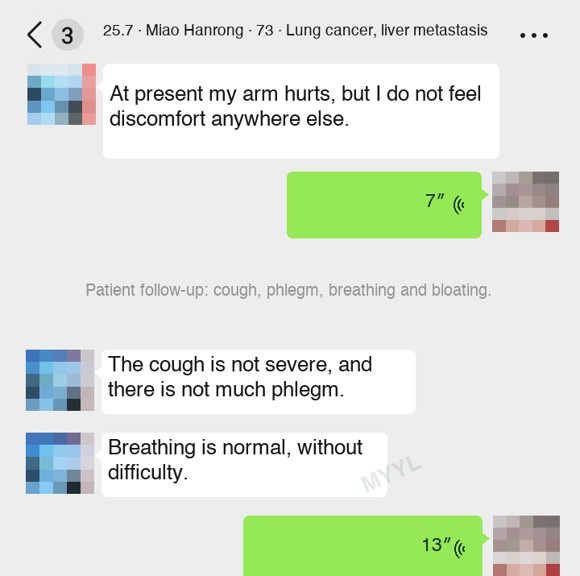
Breathing was comfortable, while arm pain continued
The follow-up describes only mild coughing and little sputum, comfortable breathing, no fever or bloating, and reasonable digestion.
 1 source image
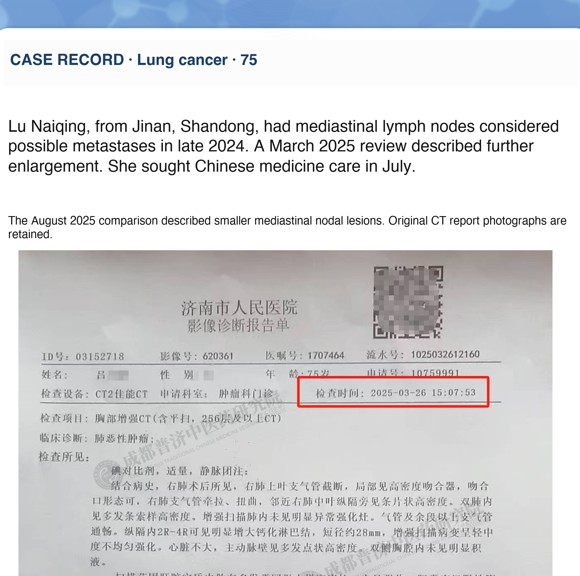
Postoperative lymph-node follow-up
Lü had previous right lung surgery.
 1 source image
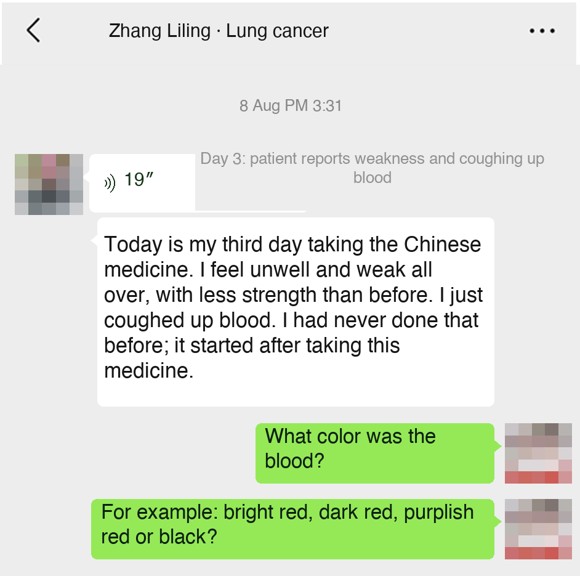
Early adverse symptoms and a later imaging update
Zhang had a history of targeted treatment.
 1 source image
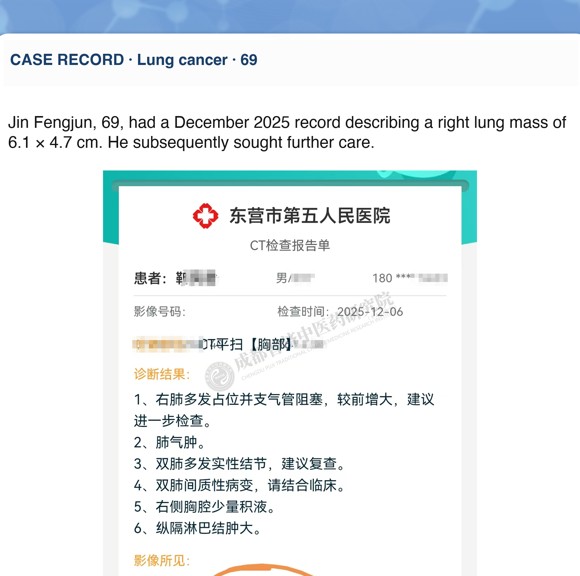
Lung measurements across two comparison intervals
The December 6, 2025 CT described a larger right lung mass than on a September examination.
 1 source image
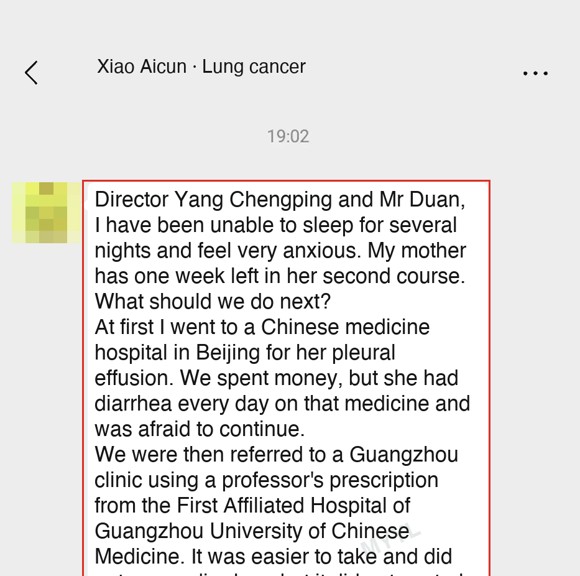
A family letter after pleural-fluid drainage
This later-designed poster reproduces a family letter dated October 20, 2024 and the earlier update also used in C095.
 1 source image
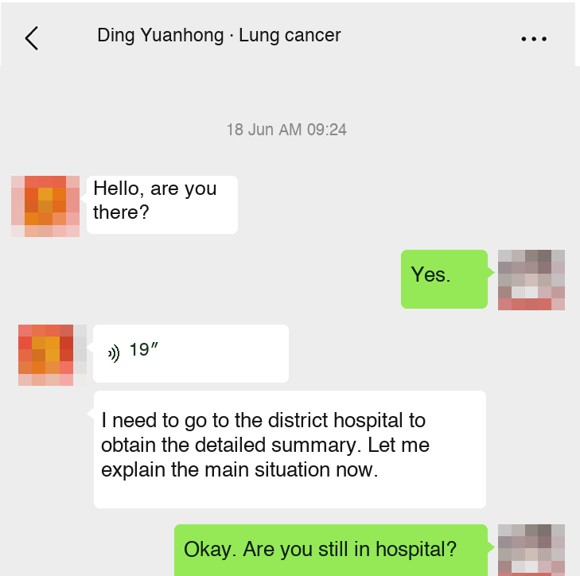
A family update includes worsening bone disease
This source overlaps with C114 but includes a more detailed June conversation.
 1 source image
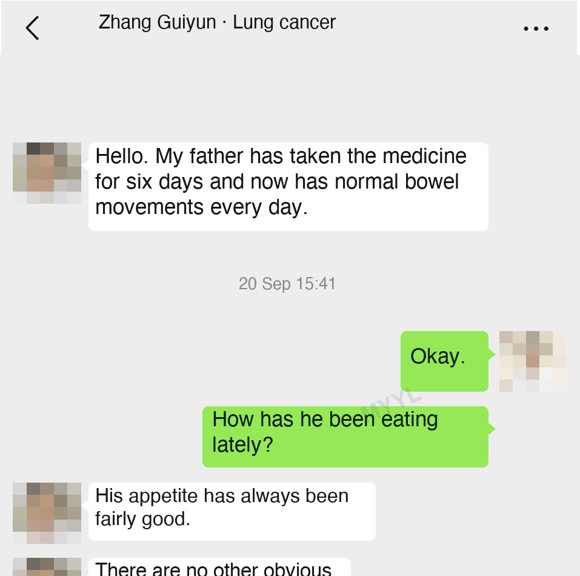
Bowel movements improved; other changes were modest
After six days, Zhang's family reported normal daily bowel movements.
 1 source image
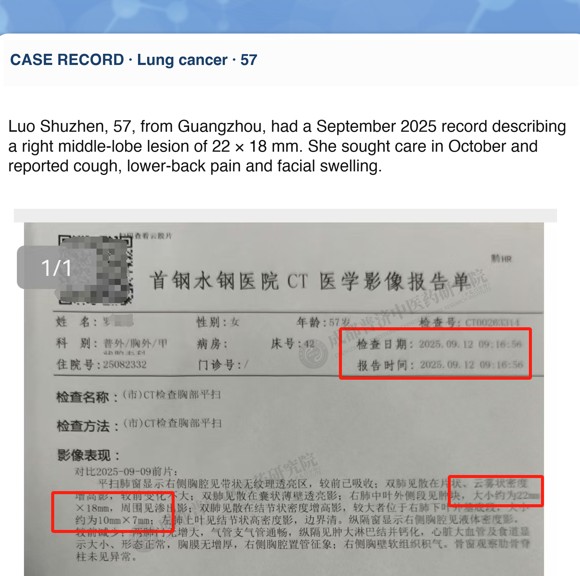
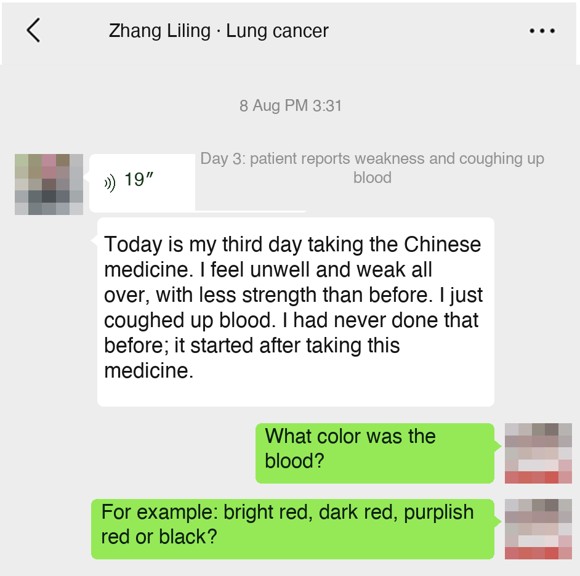
A lung follow-up with symptom improvement
The September and November 2025 CT material gives smaller dimensions for the right middle-lobe lesion on the later examination.
 1 source image
A later self-reported follow-up after an eventful start
This record extends C128 with a December update.
 1 source image
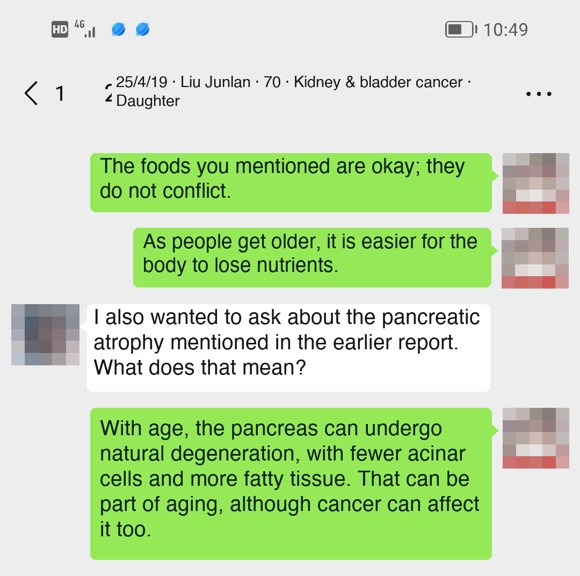
Lymph-node measurements after kidney-pelvis surgery
Li had surgery for cancer of the left renal pelvis before this follow-up.
 5 source images
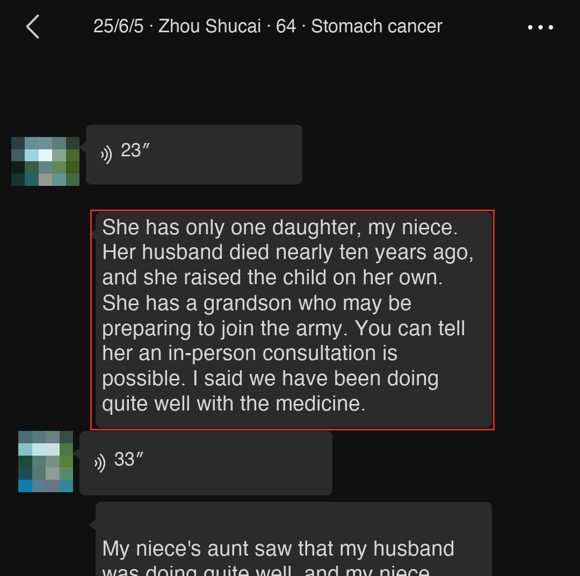
Bleeding and a later urinary-symptom update
Liu's daughter reported recurrent blood in the urine and large clots in late April and early May.
 1 source image
Eating and sleeping well on follow-up
The family described Zhou as eating and sleeping well, with sleep particularly improved.
 1 source image
Digestive symptoms and laboratory follow-up after chemotherapy
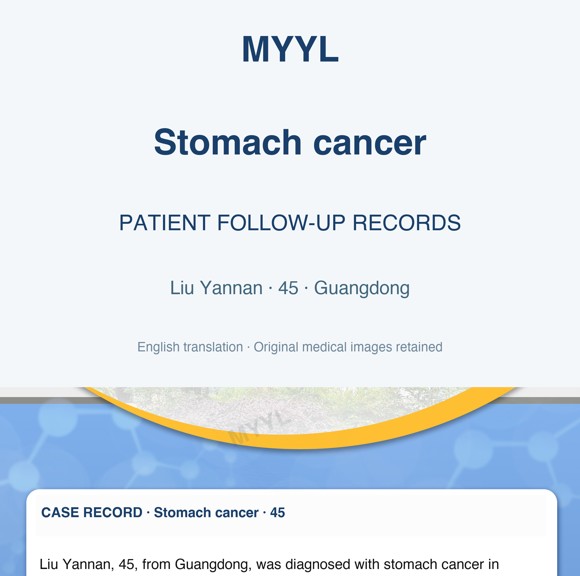
Liu had been diagnosed with stomach cancer and received chemotherapy before the care described here.
 1 source image
A family focuses on comfort through a changing course
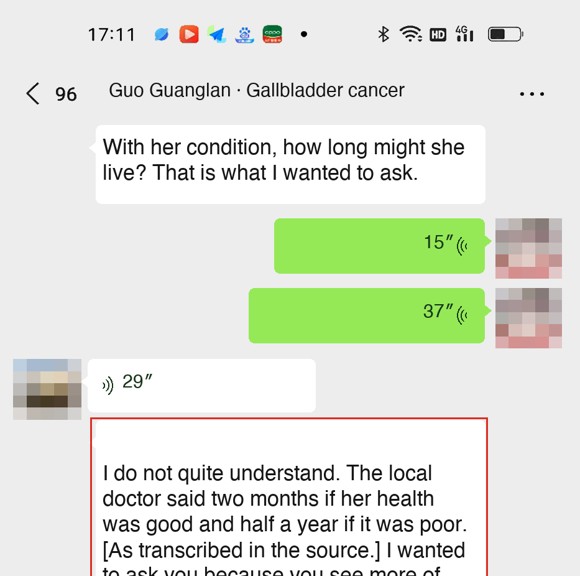
Guo's family was concerned about pain, poor appetite, weight loss and difficulty passing stool in the setting of a reported gallbladder malignancy.
 1 source image
A smaller gallbladder lesion with larger nodal disease
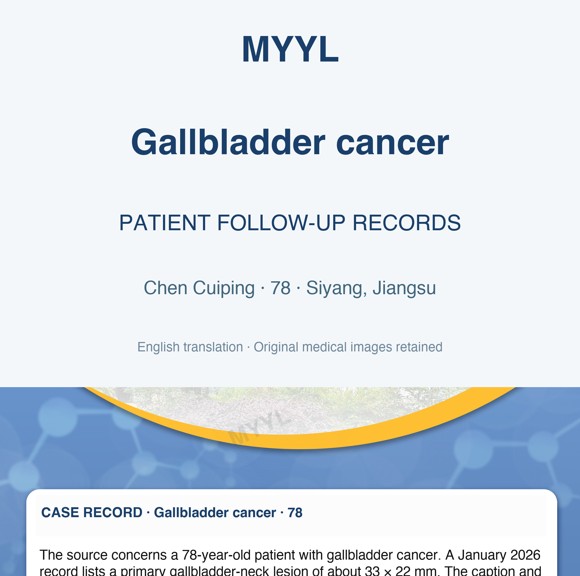
The March 26, 2026 CT describes a smaller gallbladder-neck lesion than on January 15, but also says some hilar and para-aortic soft-tissue or nodal findings were larger.
 1 source image
A family reports a more reassuring follow-up
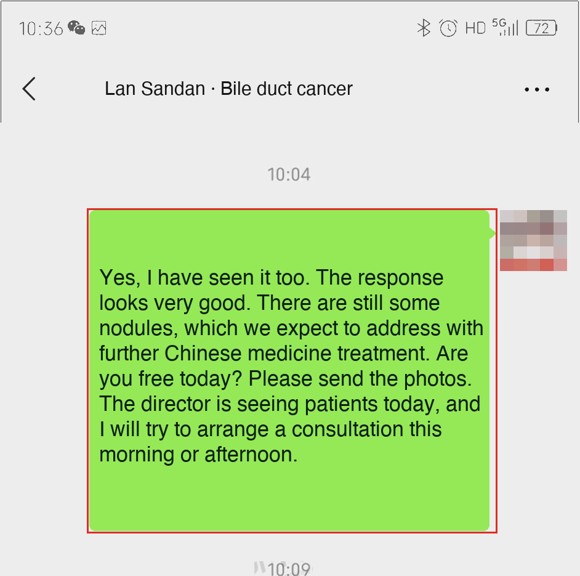
The narrative describes previous treatment for bile duct cancer, with jaundice, poor appetite, retching, abdominal pain and weight loss.
 1 source image
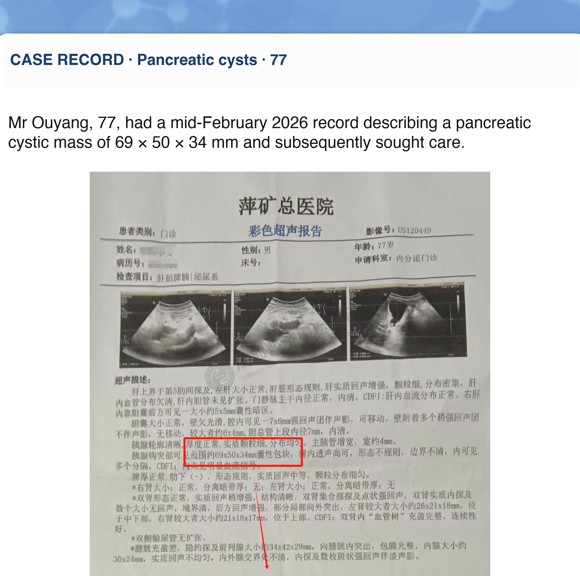
Follow-up of a pancreatic cystic lesion
Two ultrasound records show different dimensions for a pancreatic cystic lesion.
 1 source image
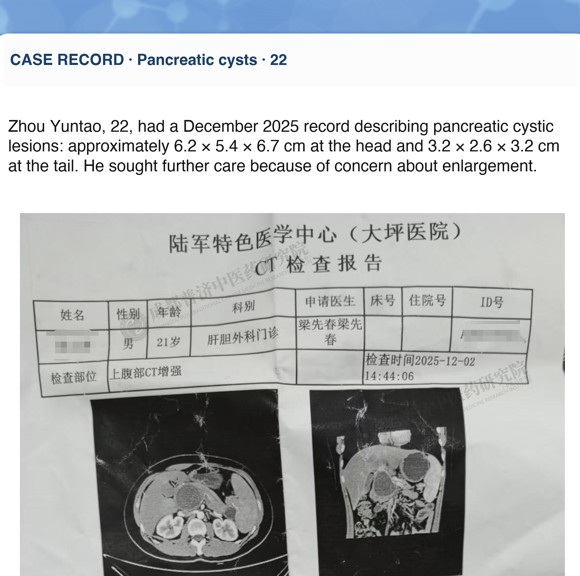
Pancreatic cystic findings in a pancreatitis follow-up
The December 2, 2025 contrast CT described cystic findings in the pancreatic head and tail.
 3 source images
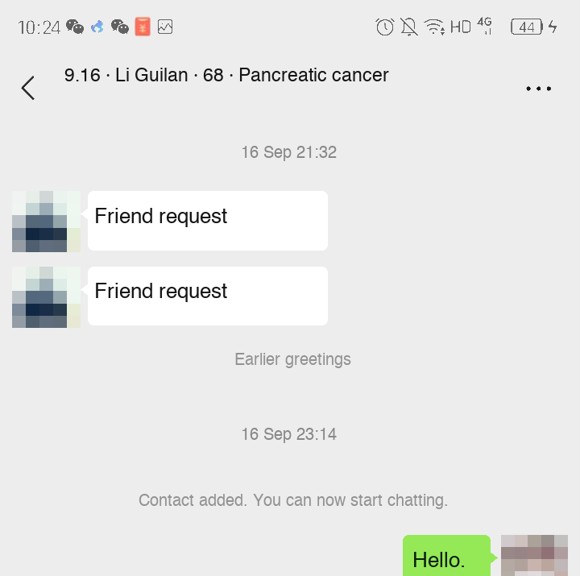
Less fatigue and pain in a family update
At the first consultation, Li's family reported two months of abdominal pain and a new pancreatic-cancer diagnosis.
 1 source image
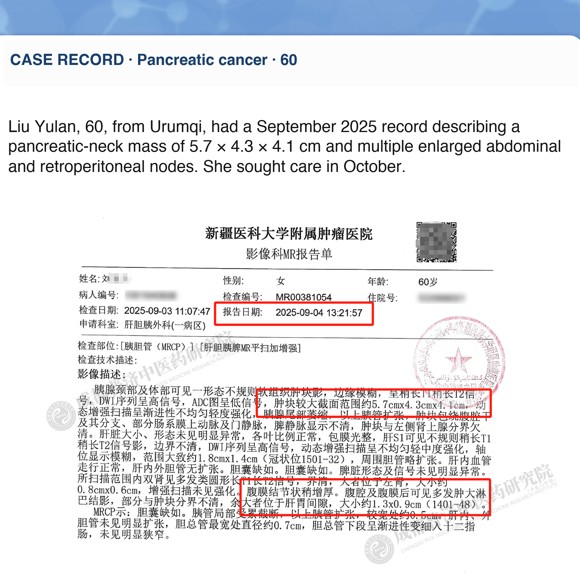
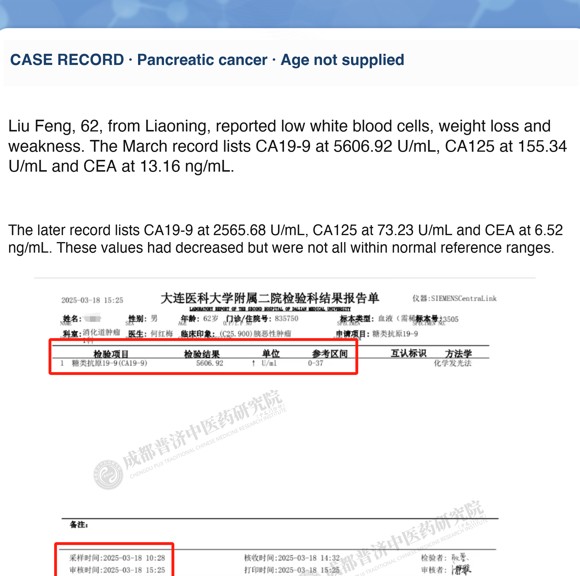
Pancreatic imaging after chemotherapy
The imaging reports explicitly state follow-up after chemotherapy.
 1 source image
Tumor markers decreased but remained elevated
The March and April 2025 laboratory reports show lower CA19-9, CA125 and CEA values at the later visit.
 1 source image
The earlier pancreatic follow-up after chemotherapy
The September 2025 MRI described a pancreatic neck/body mass with surrounding involvement and abdominal nodes.
 1 source image
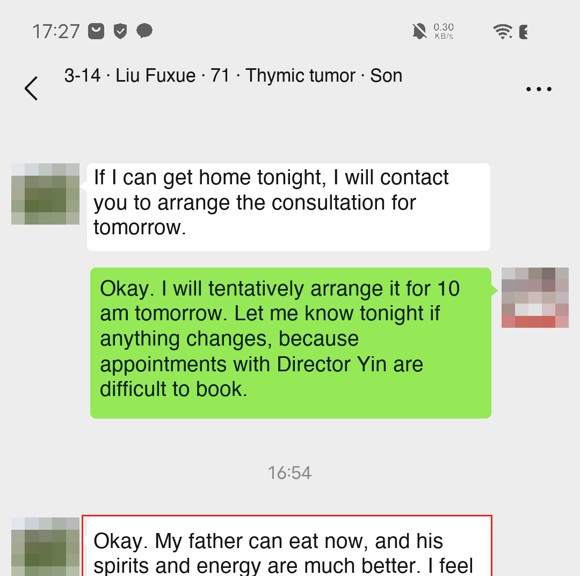
A son describes better appetite and energy
The son reported that his father could eat better and seemed more energetic while arranging a further consultation.
 1 source image
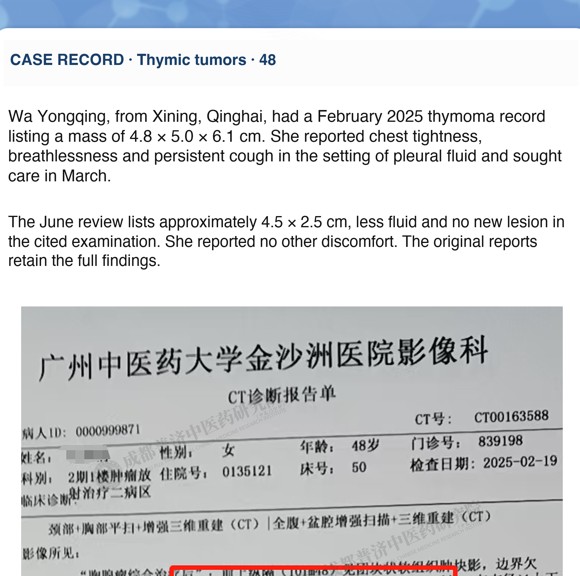
Thymic-tumor follow-up after combined treatment
The February and June 2025 reports describe a history of combined treatment and seed implantation.
 1 source image
A child's early symptom update with pain still present
The history describes recurrent poorly differentiated chordoma after surgery, severe pain, bleeding, fever and difficulty moving.
 2 source images
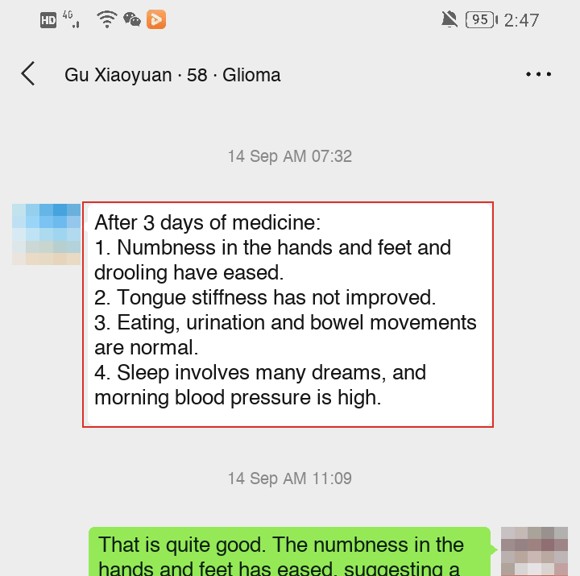
Less numbness and drooling, with speech symptoms continuing
The accompanying history includes chemotherapy.
 1 source image
MRI follow-up of suspected meningiomas
The first MRI described multiple parafalcine lesions and suggested meningiomas, with contrast MRI recommended.
 3 source images
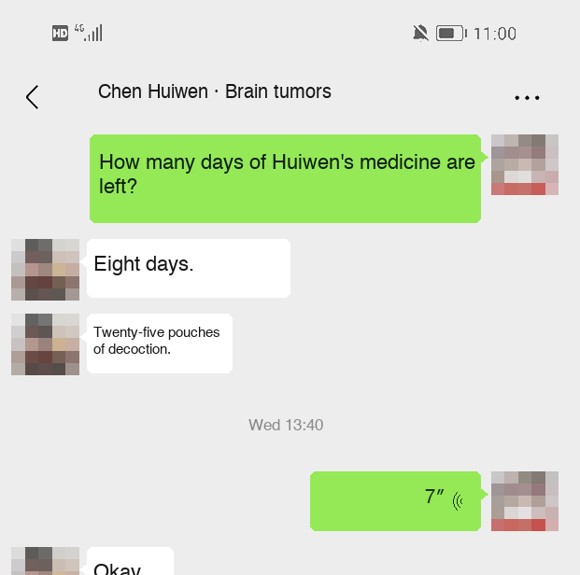
Less headache, but walking remained a problem
The family reported that Zhang was eating more and that headache and breathing discomfort had improved.
 1 source image
Family observations during recovery after brain surgery
The archive describes severe impairment after brain-tumor surgery.
 1 source image
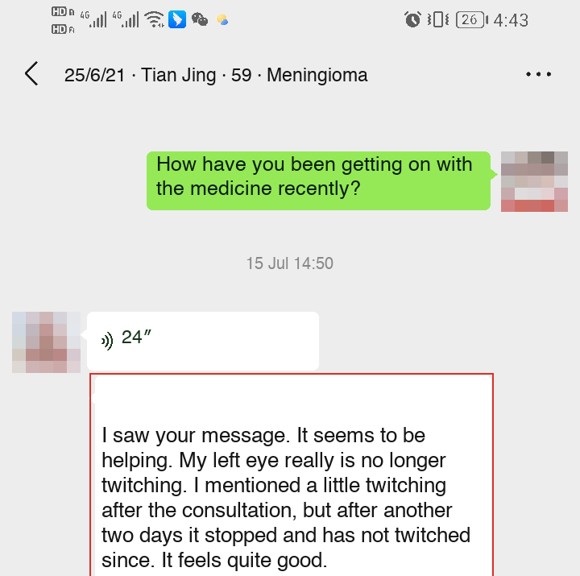
An update on eyelid twitching
In the July 15 message, Tian said her left eyelid had stopped twitching and had remained settled after a brief recurrence.
 1 source image
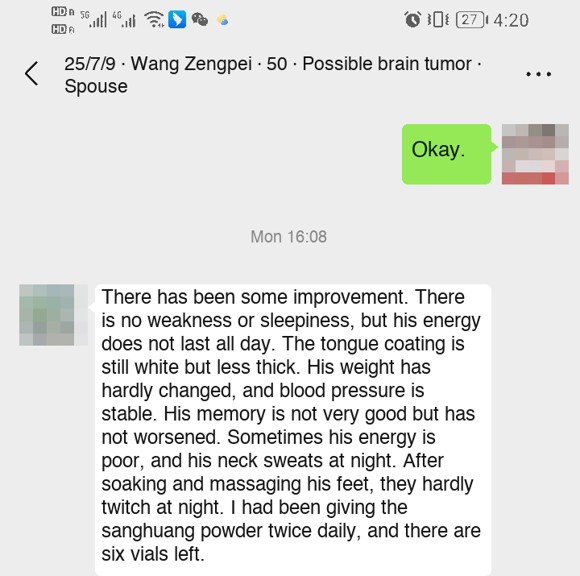
Less drowsiness, with variable energy and memory difficulty
Wang's spouse reported less weakness and drowsiness around day ten, but said his energy did not last all day and memory remained poor, although it had not continued to worsen.
 1 source image
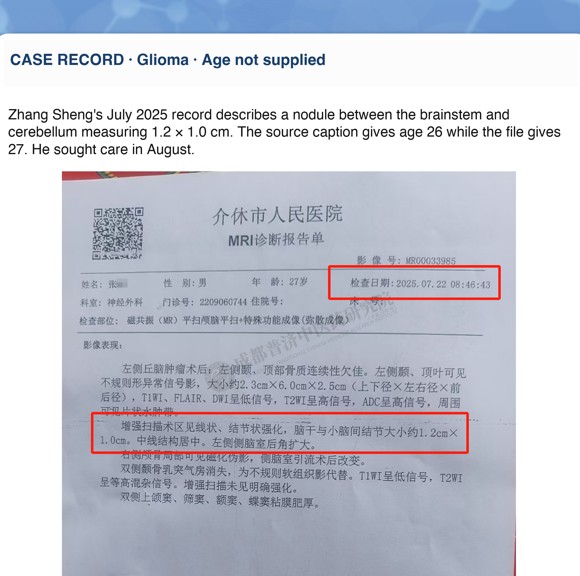
A residual brain nodule on postoperative MRI
Zhang's MRI reports describe previous surgery for a left thalamic tumor and ventricular drainage.
 1 source image
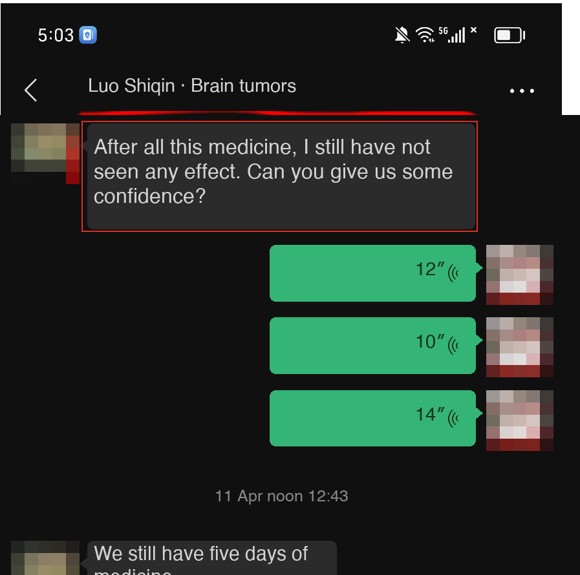
Early worsening followed by partial functional improvement
In April, Luo's spouse reported worsening swelling and thigh pain, inability to stand, and frustration that the first course had not helped.
 1 source image
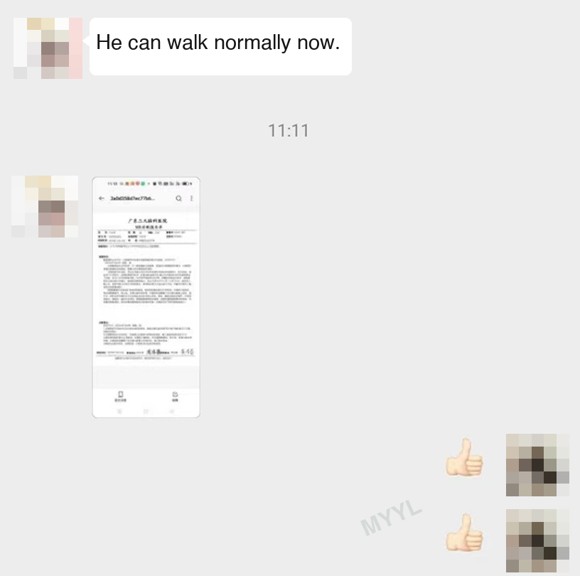
Brain imaging after biopsy and a ventricular shunt
The reports describe a right thalamic/basal-ganglia/brainstem lesion, biopsy and ventricular shunting, with postoperative hemorrhage and hydrocephalus in the earlier course.
 1 source image
Parotid findings across three ultrasound visits
The narrative describes dry mouth, a bitter taste and constipation at presentation, followed by fewer reported symptoms.
 1 source image
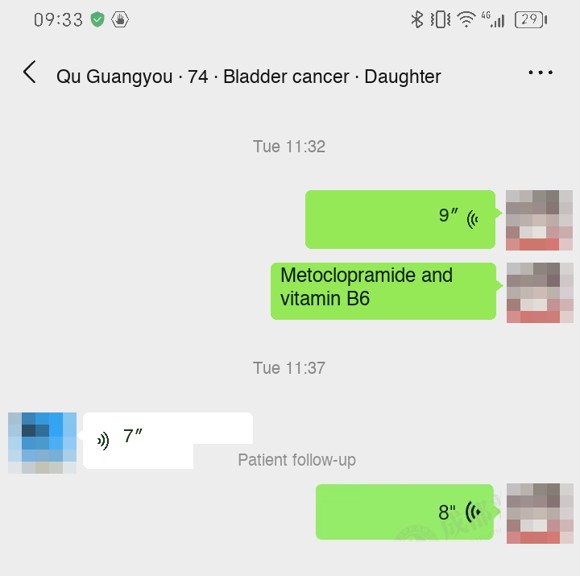
Less abdominal pain, with two vomiting episodes
After ten days of the supplied medicine, Qu's daughter described his recent condition as fairly good and said abdominal pain had clearly eased.
 1 source image
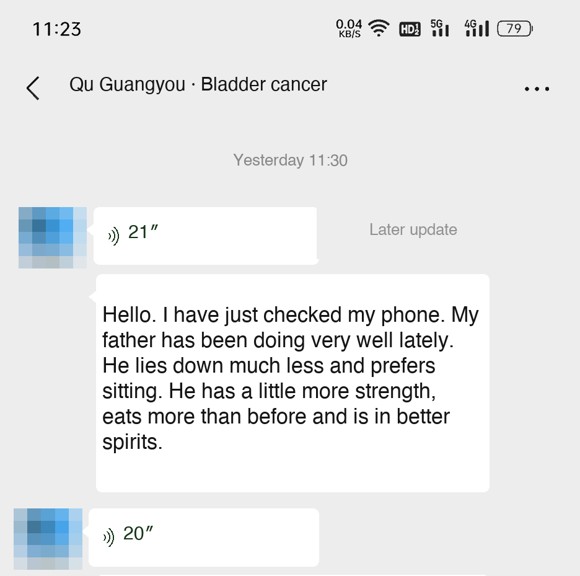
From lying down most of the day to short walks in the yard
Qu's daughter described better appetite, more conversation and enough energy to sit up and walk in the yard when it was cool.
 1 source image
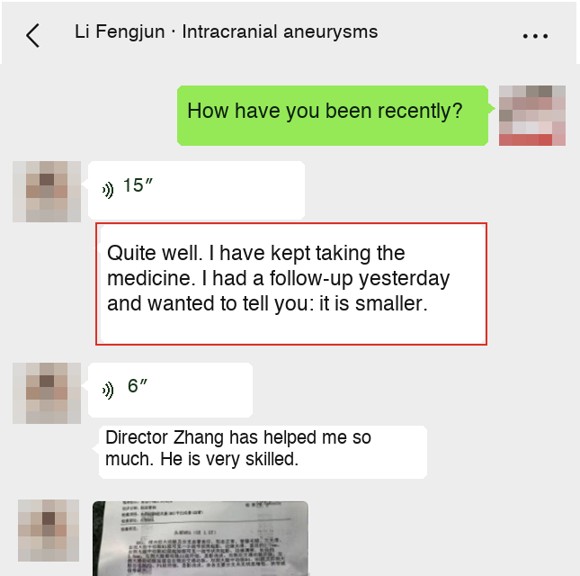
Serial measurements of suspected intracranial aneurysms
The October 2025 and January 2026 MRA reports describe small outpouchings of the right middle cerebral artery, with aneurysms considered likely and CTA or DSA suggested if needed.
 1 source image
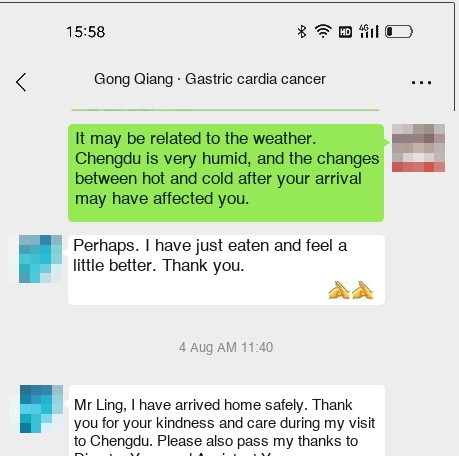
Different biopsy descriptions need a pathology review
The archive describes an initial diagnosis of moderately differentiated adenocarcinoma at the gastric cardia.
 3 source images
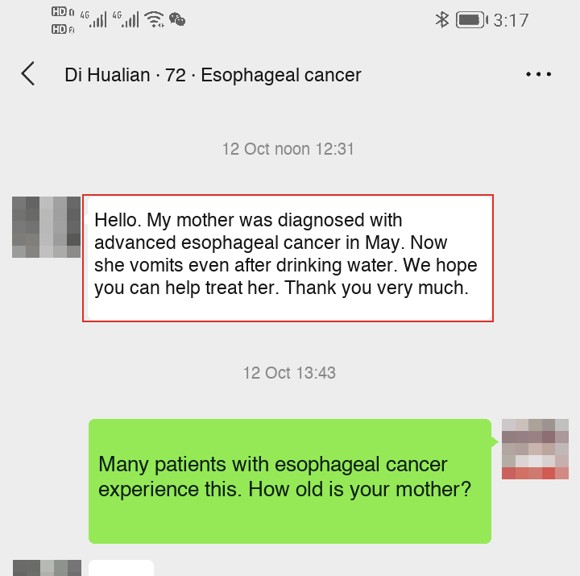
A small amount of thin porridge became possible
The family initially described advanced esophageal cancer and vomiting even after water.
 1 source image
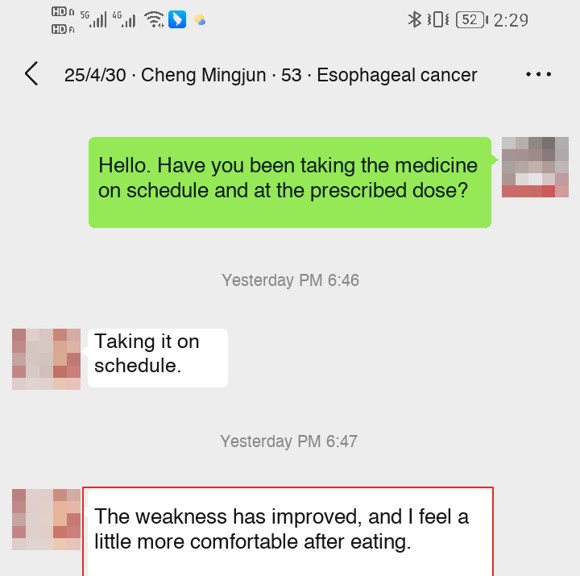
Less bloating and throat discomfort, with numbness remaining
Cheng reported less fatigue, greater comfort after eating, less bloating and less sputum and throat irritation.
 1 source image
A swallowing update after earlier oncology treatment
The narrative describes esophageal cancer, earlier oncology treatment and later improvement in swallowing and eating.
 1 source image
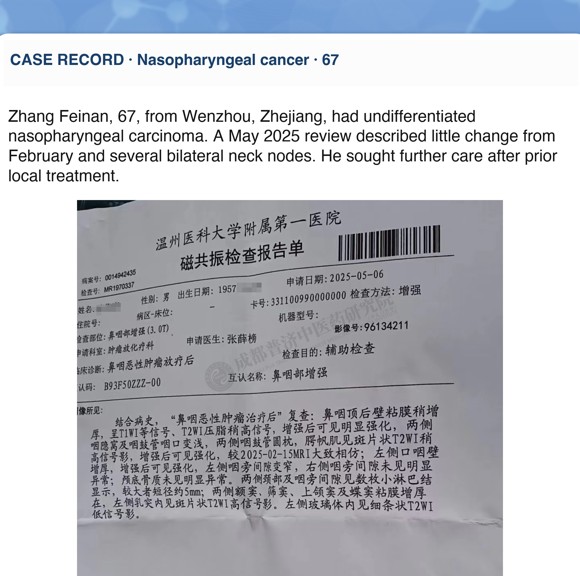
Nasopharyngeal MRI after radiotherapy
The May 2025 MRI explicitly records prior radiotherapy and largely stable post-treatment findings compared with February.
 2 source images
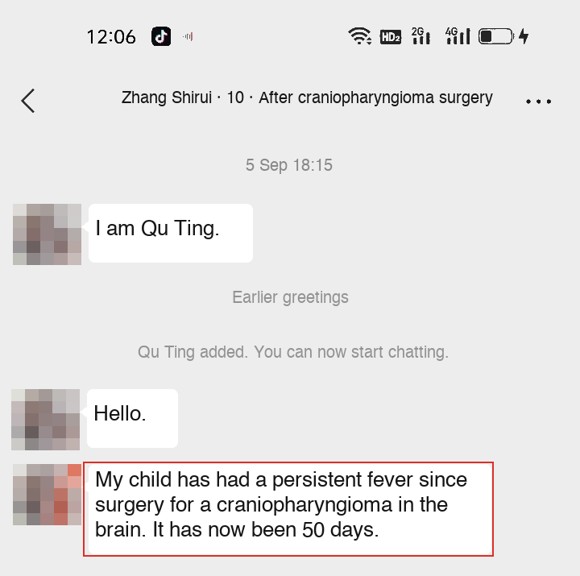
A fever update after craniopharyngioma surgery
Zhang's parent described about 50 days of fever following surgery for a craniopharyngioma.
 1 source image
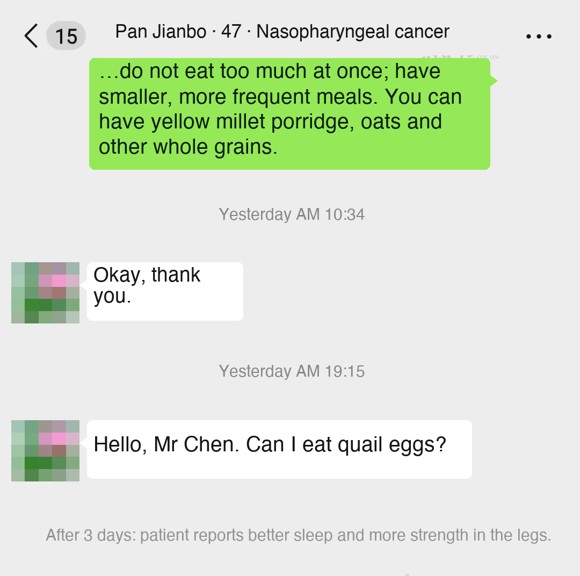
Better sleep and stronger legs in an early update
After three days, Pan reported better sleep and more strength in his legs.
Shared with patient consent. Individual accounts describe reported experiences and available source evidence; they do not establish treatment effectiveness or predict outcomes. One source record remains unclassified.